A motorcycle does not need more power to feel faster. It needs a front end that tells the rider what the tire is doing, a rear shock that controls the weight instead of releasing it, and brakes that arrive at the lever with something left in reserve. The strange part is that those changes are usually cheaper than the exhaust system most owners buy first.
The order is not a matter of taste
A motorcycle is a system for managing one small patch of rubber. Every input — throttle, brake, steering, rider weight, luggage — passes through the tires before it reaches the road. Upgrades should follow that path, not the parts catalogue. If the contact patch is old, over-inflated or squared off, the rest of the money is being spent on a conversation the tires cannot hear.
This is also why two identical bikes can feel completely different. One owner has set sag for their weight, replaced the tires, bled the brakes and adjusted the bars. The other has bought a louder exhaust and a stiffer rear spring because “factory suspension is soft.” Only one of them has changed the way the machine behaves.
If you are starting with a used bike, establish the baseline before you modify anything. A machine with unclear history is a separate question — the same one that decides whether a classic is worth restoring or simply riding. Our guide to what makes a motorcycle collectible covers that distinction; here we are concerned with the bike you already own.
Power is the easiest thing to sell and the last thing you will use. IndoBikes Journal — Performance
Tires: the cheapest suspension you own
Before buying a spring, check the date code on the sidewall. Rubber hardens with age even when the tread looks healthy, and a tire that has spent three summers in the sun will not give the same feedback as a fresh one. Check the pressures cold, with the bike loaded the way you actually ride it. The number in the manual is a starting point, not a law; a few psi can change how the front reads at turn-in.
Profile matters as much as compound. A squared-off rear tire makes the bike fall into corners and then stand up under power. A worn front can feel vague long before it looks bald. Choose the tire for the riding you do: wet mornings, broken asphalt, long loaded days. A sport tire that never reaches temperature on a commute is not a performance upgrade.
Suspension: set it before you spend
Start with rider sag. Measure the rear with the bike unladen, then with you on it in your normal riding position. If the spring cannot be set within a sensible range for your weight, no clicker will fix it. Spring rate is the foundation; damping only controls how that spring behaves.
Rebound damping controls how the spring releases. Too little and the bike wallows and pushes wide; too much and it packs down over a series of bumps. Compression damping controls how the suspension absorbs the hit. On older machines, fresh fork oil, new bushings and correct seals can do more than a set of expensive adjusters. A cartridge emulator or a proper revalve is often better value than a new fork, because it changes the damping curve rather than the badge on the cap.
Tell the specialist where you ride and what you carry. A setup for smooth mountain roads is not the same as a setup for broken city asphalt or the volcanic descents in our guide to five Indonesian roads worth a season. A good shop will ask about load, pace and tire choice before it reaches for the clickers. If it does not, find another shop. Öhlins publishes useful general guidance on sag and damping, but the settings that matter are the ones you arrive at on your road.
Do not confuse stiffness with control. A rear end that feels “sporty” in the showroom is often just over-sprung and under-damped, skipping across the surface instead of reading it. Comfort and grip are not opposites; a suspension that keeps the tire loaded is both.
Brakes: feel before force
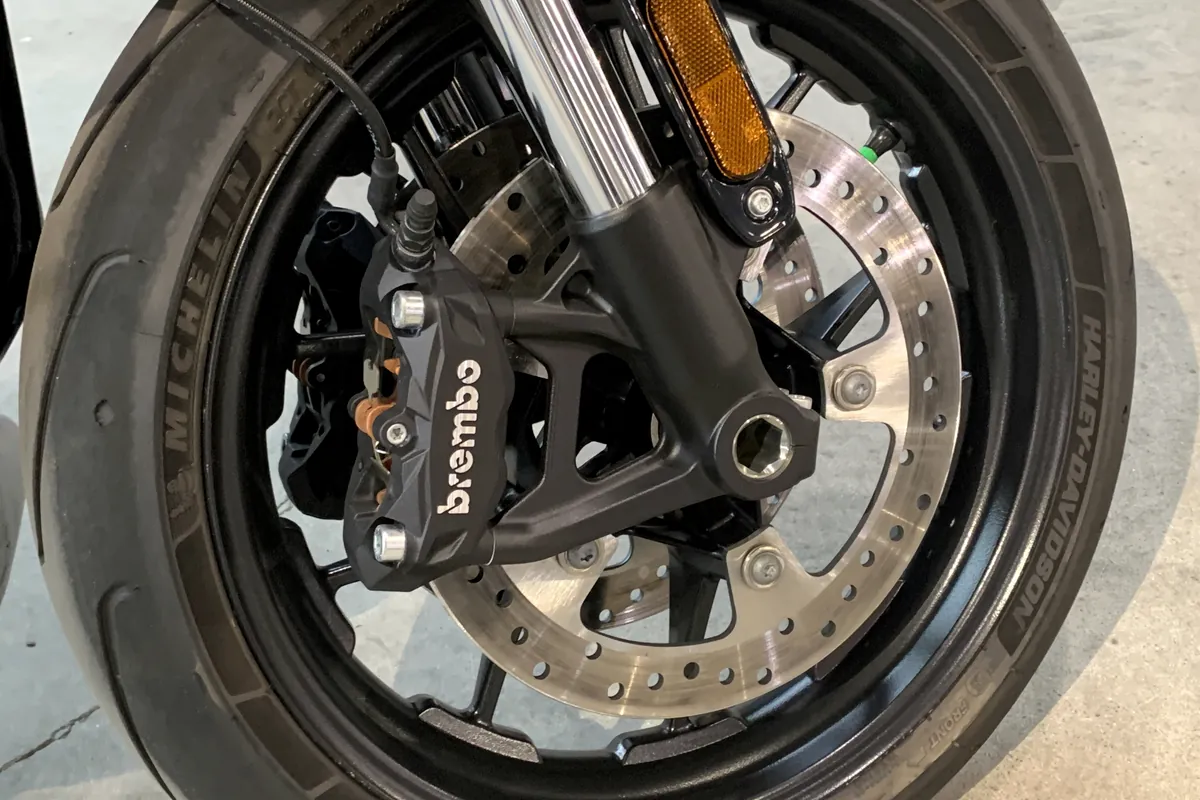
Brakes are a system: lever, master cylinder, line, caliper, pad, disc and tire. Changing one part without considering the others usually moves the problem rather than solving it. A larger master cylinder can make the lever firmer while reducing modulation. A race pad that needs heat is worse on a wet morning than a good street pad. A bigger disc is wasted if the tire cannot use the extra force.
The first upgrade is usually fresh fluid and quality pads, followed by stainless lines if the originals are old. Rubber lines expand under pressure; the lever feels softer and some of the travel is doing nothing at the caliper. Bed the new pads in properly, clean the discs, and check that the pistons move freely. A caliper that drags is not a performance caliper.
If you go further — monobloc calipers, larger discs, a radial master cylinder — match the package to the bike and the rider. Brembo and other manufacturers publish compatibility information for a reason. The best brake upgrade is the one that gives you more feel at the lever, not simply more bite at the first millimetre of travel.
Power: the last five per cent
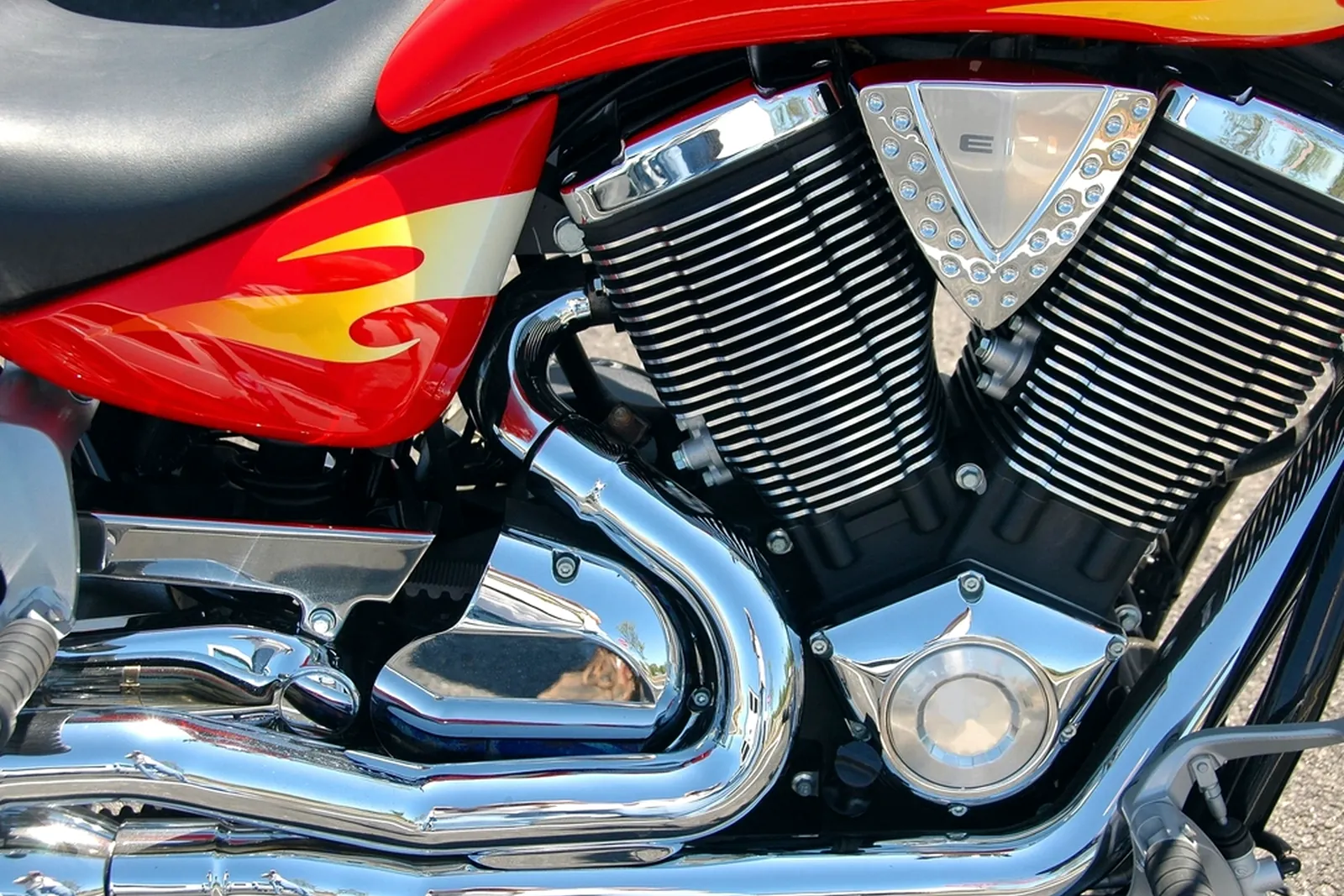
Intake, exhaust and fuel mapping are the usual first engine modifications, and they can work well together. They can also work badly. A freer-breathing engine without a matching tune often loses the midrange that makes a road bike feel quick. A dyno chart is a snapshot of one pull; rideability is the shape of the curve between the corners you actually use.
Camshafts, compression and displacement change the character of the machine, not just the number at the top. They also raise the cost of every mistake: clearances, oil temperature, cooling, fuel quality and the competence of the tuner. On a street bike, a well-sorted standard engine with a clean exhaust and a proper map is often enough. The last five per cent costs the most and is the least useful on a road with traffic, rain and imperfect surfaces.

Weight and ergonomics
Reducing unsprung weight — wheels, discs, calipers, swingarm — changes how the suspension follows the road. Reducing sprung weight — battery, exhaust, luggage — changes how the bike accelerates, brakes and changes direction. A lithium battery can save kilograms, but it needs a compatible charger and a regulator that behaves. Light wheels are expensive and transformative; a lighter exhaust is cheaper and mostly cosmetic unless the original was unusually heavy.
Ergonomics are performance. A handlebar that puts your wrists at a bad angle, pegs that trap your knees, or a seat that slides you into the tank will cost more pace on a long day than a few horsepower will add. Move the bars, adjust the levers, try a different seat. The same principle applies to riding gear: the best piece is the one you forget you are wearing.
Do not lower a bike for looks unless you understand what it does to ground clearance, suspension travel and steering geometry. A machine that cannot lean without scraping is not more capable; it is just less honest about its limits.
A sensible sequence
This is the order we would use on a road bike that has to work every day. Do one stage at a time and ride it. A change you cannot feel is either unnecessary or not set up properly.
| Stage | What to do | Why it comes here |
|---|---|---|
| 0. Baseline | Fresh tires, correct pressures, brake fluid, wheel and steering bearings, chain, rider sag. | You cannot judge an upgrade against a worn baseline. |
| 1. Control | Springs for your weight, revalve or emulator, braided lines, good pads, bar and peg position. | This is where most of the real-world gain lives. |
| 2. Mass and feel | Lighter wheels or battery, master cylinder matched to the calipers, seat, luggage. | Refines the package without changing its character. |
| 3. Power | Intake, exhaust, map, cam or displacement — with a tuner who rides the result. | Only worth doing once the chassis can use it. |
If you would rather not manage the sequence yourself, a good workshop will do it in the same order. Our service page explains how a commission is structured, and the Bara scrambler shows what long-travel suspension and a stripped-back build look like when the brief starts with the road rather than the engine.
What not to do
- Lowering links or a cut-down seat fitted for looks, without correcting geometry or travel.
- A rear spring so stiff that the bike skips instead of gripping.
- Cheap adjustable levers that bind, flex or fail to release the brake light.
- An open exhaust or removed airbox without a matching tune and a plan for noise.
- “Performance” chips or resistors that only lie to the ECU.
- Brakes far beyond the grip of the tires, or tires far beyond the condition of the suspension.
- An engine rebuild before the chassis has been baselined.
- Copying a race setup onto a road bike with different tires, load and surfaces.
The test that matters
The dyno is a useful liar. It can tell you that an engine makes more power in a controlled room, but it cannot tell you whether the front tire still talks to you at the limit, whether the rear stays composed over a mid-corner bump, or whether you arrive at the end of a long day less tired than before.
A good upgrade makes the bike quieter in your hands: fewer corrections, less braking anxiety, more margin. That is not a number you can print on a box. It is the reason we spend the first money on the contact patch and the last on the badge.