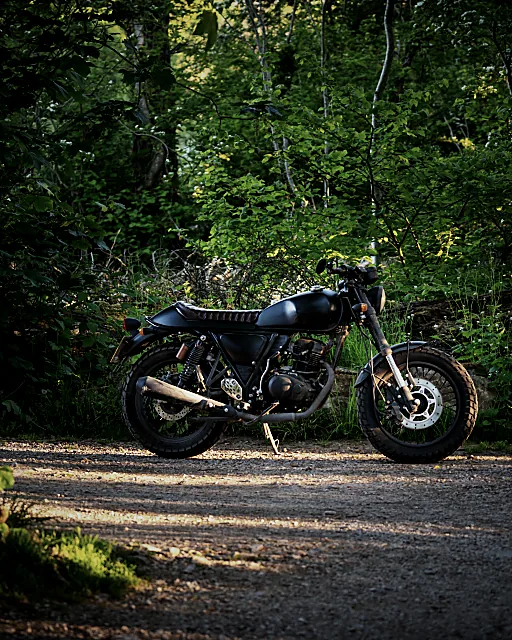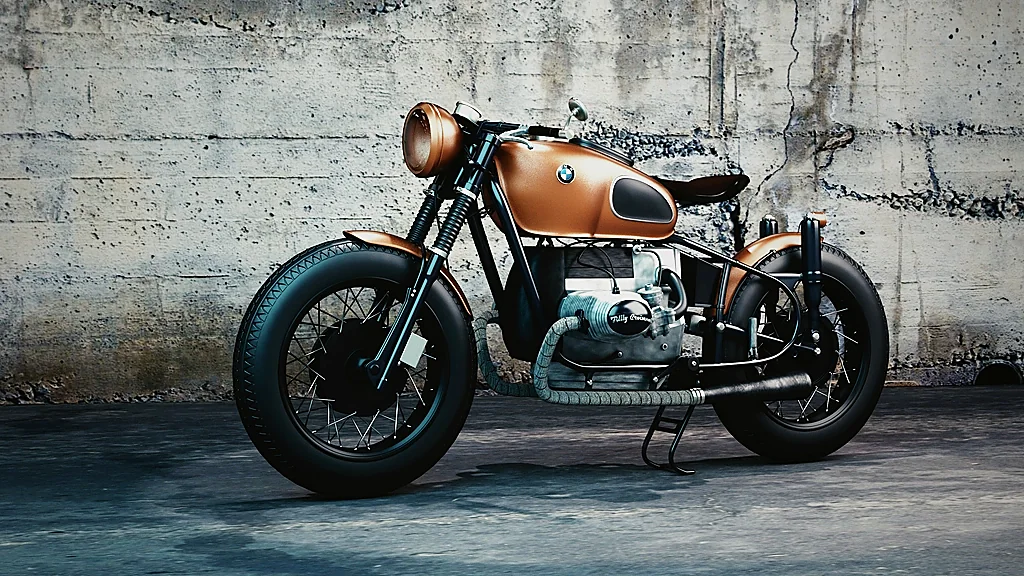
A restomod is not a restoration and not a custom. It is a considered compromise: modern brakes, suspension and electrics under a classic silhouette.
Start with safety
Brakes, tyres, suspension and lighting are the first upgrades. A classic with modern brakes and good tyres is safer and more usable.
Keep the original parts so the changes can be reversed.
Respect the structure
Frame, steering geometry and swingarm limits decide what is possible. A modern front end can change rake, trail and ride height; measure before fitting.
Do not cut a frame without engineering advice. A beautiful bike with a weak frame is a bad trade.
Electrical and engine
A modern loom, regulator and lighting can make a classic reliable. Keep the original harness if you want reversibility.
Engine upgrades should match the brakes and chassis. More power without better stopping is not an upgrade.
Finish and documentation
Paint and finish are the last step. Document the parts, settings and work so the bike can be serviced and valued.
A restomod is a custom in market terms. Be clear about that if resale matters.
Checklist
- Brakes, tyres and suspension first.
- Frame and geometry limits.
- Electrical reliability and reversibility.
- Engine upgrades matched to the chassis.
- Original parts retained.
- Documentation of changes.
- Resale and originality trade-offs.
Questions
Does a restomod reduce value?
It can, unless the buyer wants exactly that build. Keep the original parts and document the work.
Can I fit modern brakes to a classic?
Often, with the right adapters and master cylinder. The whole system must be matched, not just the caliper.
Is it better than a restoration?
It depends on the goal. A restomod is for riding; a restoration is for originality. Both can be valid.