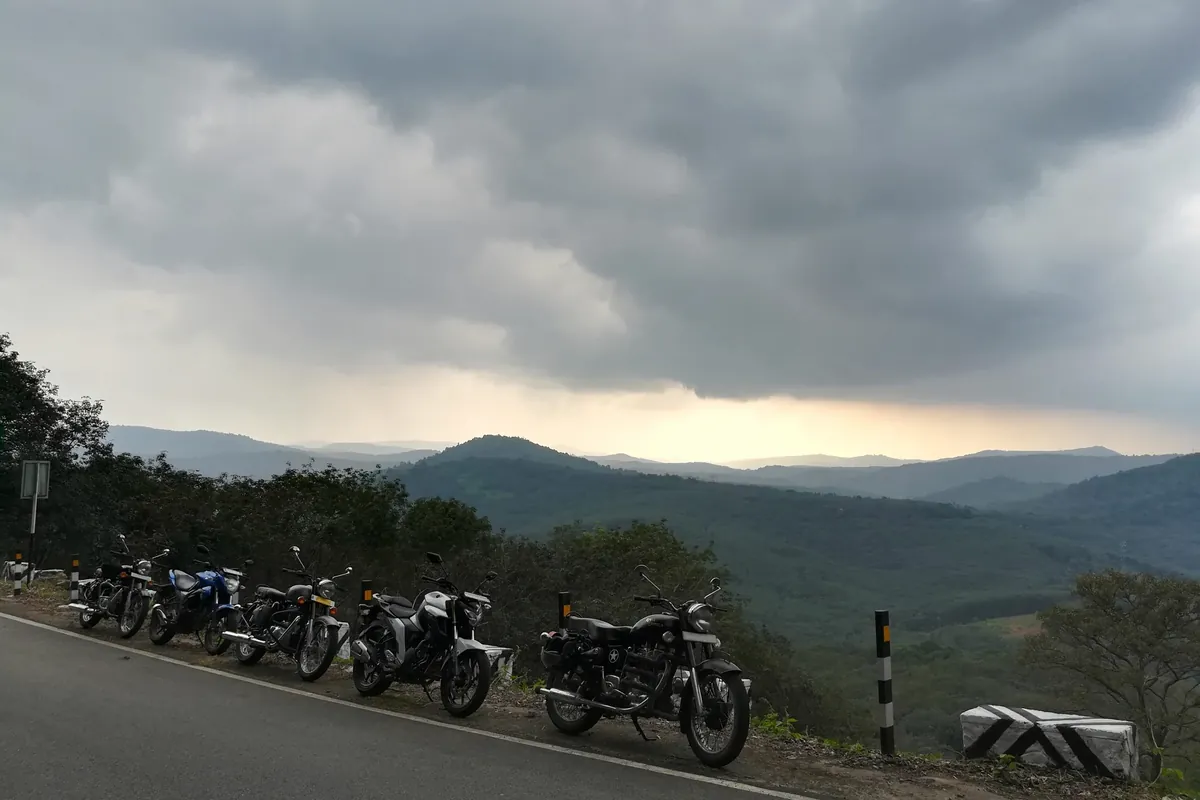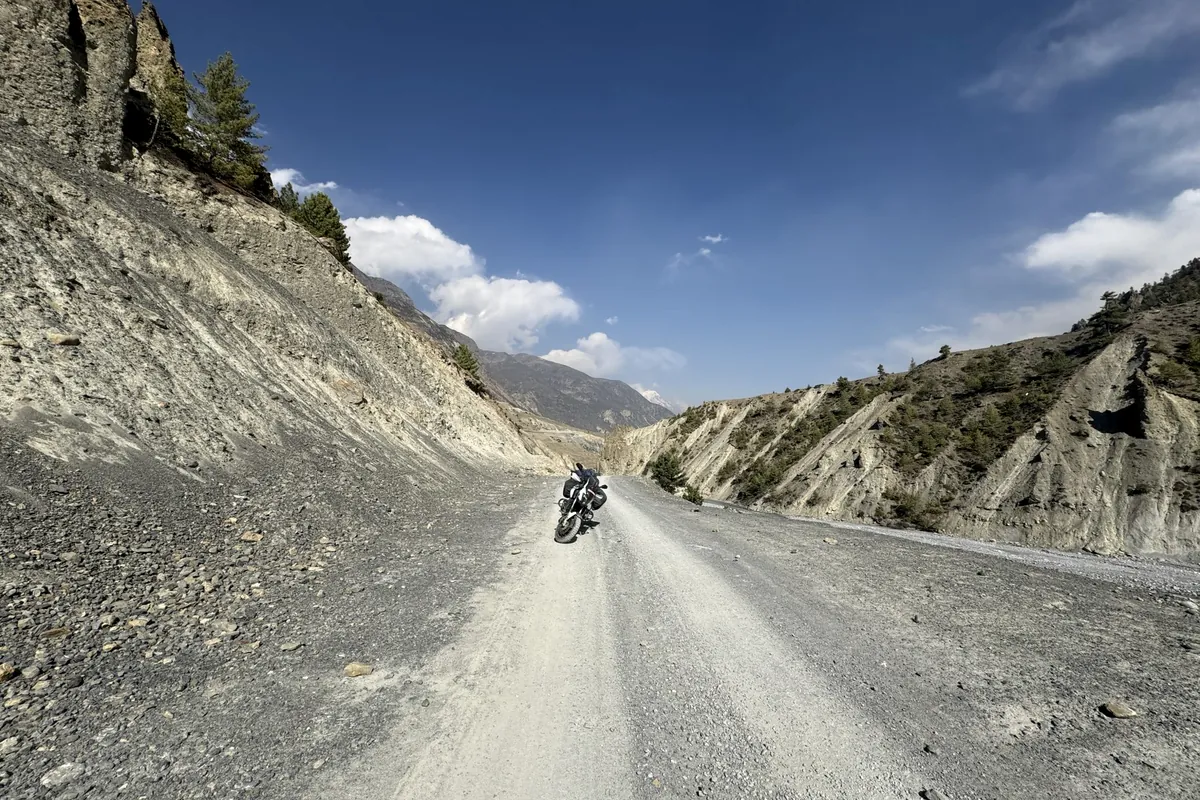
Rural riding in Indonesia is a mix of sealed road, patched asphalt, gravel, mud and the occasional water crossing. The bike that copes is not necessarily an adventure machine. It needs enough clearance to miss rocks, suspension that absorbs a pothole and wheels that roll over a broken edge without pinching a tyre. Durability and parts availability matter more than top speed.
Surface to priority
| Surface | Main risk | Bike priority |
|---|---|---|
| Potholed asphalt | Bent rim, damaged suspension | Ground clearance and tyre sidewall |
| Gravel and loose stone | Loss of front grip | Predictable steering and suitable tread |
| Mud and wet clay | Clogged tyres, loss of traction | Tread pattern and light weight |
| Water crossing | Water ingestion, stalled engine | Air intake height and electrics |
| Long dirt sections | Dust, chain wear, vibration | Sealed bearings and easy chain care |
Surface first, brand second
Start by describing the worst section of your regular route, not the best. If the answer is a broken village road with loose gravel, a scooter with small wheels and short suspension will be tiring and expensive. If it is mostly sealed with a short dirt section, a rugged commuter may be enough.
Ground clearance is the first specification. A low-hanging exhaust, a vulnerable engine case or a body panel that collects stones will make every trip a risk. Look under the bike, not only at the seat height.
Clearance and suspension travel
Longer suspension absorbs a pothole and keeps the tyre in contact with the road. It also raises the seat, which can be a problem for a shorter rider. The answer is not always a dual-sport; some underbones and commuters have more travel than a city scooter.
Check the fork and shock for leaks and for evidence of bottoming out. A used bike with a collapsed rear shock will feel harsh and unstable, and a replacement may cost more than the difference to a better example.
Wheels, tyres and tubes
Larger wheels roll over obstacles more easily and are less likely to pinch a tube. Spoked wheels can be repaired in the field; cast wheels are stronger in some impacts but can crack. Tubeless tyres are easier to plug, but a damaged rim may not seal.
Choose a tread pattern that clears mud and grips gravel, not a road tyre with a fashionable block pattern. Carry a repair kit and know how to use it. A puncture in a village with no workshop is a long walk.
Water, dust and chain care
Water crossings are the fastest way to destroy a chain, a wheel bearing or an engine. If the water is above the axle, find another route. If you must cross, go slowly, keep a steady throttle and do not stop in the middle. Afterward, dry and lubricate the chain and check the air filter.
Dust is abrasive. Clean or replace the air filter more often, keep the chain lubricated and inspect the brake pads for grit. Sealed bearings last longer, but they still need to be checked after deep water.
Parts and repair distance
A common model is a practical advantage when the nearest workshop is an hour away. Tyres, cables, brake pads and chains for popular machines are more likely to be in stock. An unusual import may be tough, but a part that must be ordered can leave the bike unusable for days.
Carry the tools you can actually use: spanners for the axle, a tyre lever, a pump, cable ties, tape and a spare fuse. A small compressor or a hand pump is worth the space if your route is remote.
Load and lighting
Rural trips often involve carrying produce, a passenger or supplies. Check the rack mounts and the load limit. A rear rack bolted to the bodywork rather than the frame will crack under a heavy load. Distribute weight low and forward.
Lighting matters on unlit roads. A weak headlight is a safety problem, not a cosmetic one. If you upgrade, use a properly aimed lamp that does not blind oncoming traffic, and check that the charging system can support it.
The bottom line
Buy for the worst kilometre of the route: clearance, suspension travel, a repairable wheel and a common parts supply. A light dual-sport or a rugged commuter will usually outlast a fashionable city scooter on rural roads.IndoBikes workshop
Checklist
- Ground clearance is enough for the deepest rut on your route
- Suspension has travel and does not bottom out with a load
- Wheels and tyres suit gravel and can be repaired locally
- The air intake is high enough for the water you may cross
- The chain or belt can be maintained without special tools
- A workshop within reach stocks consumables for the model
- The rack is frame-mounted and rated for the load
- The headlight is adequate for unlit roads
Questions
Is a scooter suitable for rural roads?
For short sealed sections, yes. For long gravel or broken roads, small wheels and short suspension make it tiring and more prone to damage. A rugged underbone or dual-sport is better.
Do I need a dual-sport for village roads?
Not always. A commuter with good clearance and larger wheels can cope with graded dirt. A dual-sport helps when the surface is consistently loose, steep or badly broken.
How do I protect a bike from dust?
Service the air filter more often, keep the chain lubricated, check the brakes for grit and avoid riding through deep dust at speed. A pre-filter can help in extreme conditions.
Can I ride through a flooded road?
Only if the water is well below the air intake and you can see the surface. Water above the axle risks wheel bearings, the chain and the engine. If in doubt, turn around.