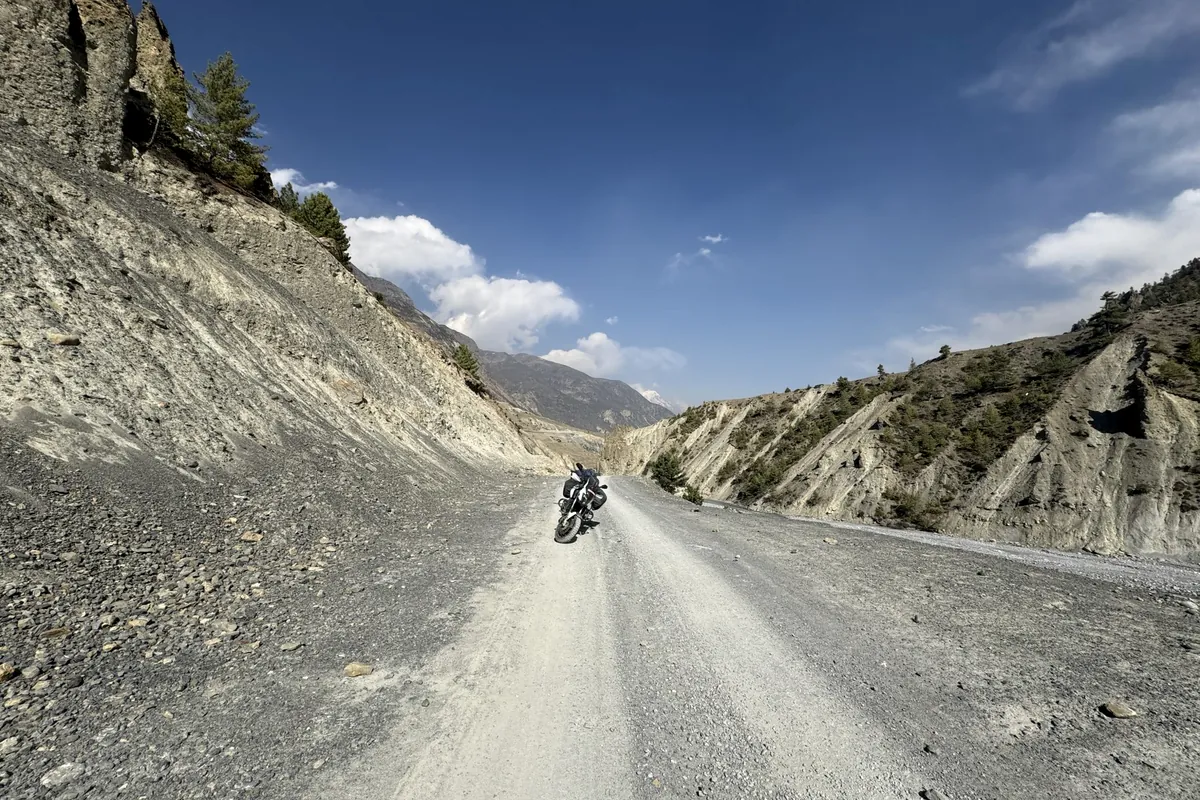
Adventure and dual-sport bikes overlap, and the labels are used loosely by sellers. In general, a dual-sport is a light motorcycle with long suspension and a tall seat, built to handle dirt without giving up road legality. An adventure bike is heavier, carries luggage and a passenger more comfortably, and is designed for long distances that include unpaved sections. The right choice depends on how much off-road you actually ride and how much you carry.
The practical split
| Factor | Dual-sport | Adventure |
|---|---|---|
| Weight | Light, easy to pick up | Heavier, more tiring in soft ground |
| Suspension | Long travel, simple | Long travel, often more sophisticated |
| Seat height | Tall | Tall to very tall |
| Luggage | Minimal; add soft bags | Designed for panniers and a passenger |
| Road comfort | Basic; wind exposure | Better wind protection and seat |
| Off-road ability | Depends on tyres and rider | Limited by weight on technical terrain |
Weight decides where you can go
A light dual-sport can be picked up, turned around on a narrow trail and ridden through soft sand by a determined rider. A heavier adventure bike is stable on a gravel road but exhausting in technical terrain, especially when it falls.
If your off-road riding means graded dirt roads and occasional broken surfaces, an adventure bike is fine. If it means ruts, mud and steep climbs, weight becomes the limiting factor.
Seat height and confidence
Both categories are tall, because long suspension needs room. A rider who cannot reach the ground confidently will avoid the situations the bike was bought for. Sit on the bike in boots, ideally with a load, and try a slow turn on an uneven surface.
A lowering link or a low seat can help, but it reduces ground clearance and suspension travel. On a dual-sport, that defeats part of the purpose. Choose a bike that fits rather than modifying one that does not.
Tyres and the surface you ride
A dual-sport on road-biased tyres is a road bike with a tall seat. A knobbly tyre helps in mud but wears quickly on asphalt and can feel vague in the wet. Most riders compromise with a 50/50 or 70/30 pattern.
An adventure bike often comes with road-biased tyres and a 19-inch front wheel, which is stable on gravel but less agile in technical terrain. Match the tyre to the riding you do most, and accept that no single tyre is excellent everywhere.
Luggage, passenger and distance
An adventure bike's subframe, seat and wind protection are designed for distance with luggage. That is its advantage. A dual-sport can tour with soft bags, but the seat and wind exposure make long days harder.
If you ride with a passenger, check the seat length, the grab rails and the load limit. A tall bike with a passenger and luggage has a high centre of gravity, which matters on a camber or a loose surface.
Maintenance in dusty conditions
Both types need more frequent air filter cleaning, chain care and bearing checks than a road bike. Dust is abrasive, and water crossings can damage bearings and electrics. A simpler bike with accessible components is easier to keep going in remote areas.
Check that consumables and filters are available locally. A specialist adventure bike with unique tyre sizes can be stranded by a puncture in a town with no replacement.
Which to buy
Choose a dual-sport if you ride solo, want to explore rough roads and value light weight over comfort. Choose an adventure bike if your trips are longer, include a passenger or luggage, and the unpaved sections are moderate.
Be honest about the ratio of road to dirt. Most Indonesian adventure bikes spend most of their time on asphalt, where a lighter machine is often more enjoyable. Buy for the riding you do, not the ride in the brochure.
The bottom line
Light dual-sport for technical dirt and solo exploration; adventure bike for distance, luggage and moderate gravel. Weight and seat height decide more than the label.IndoBikes workshop
Checklist
- You can reach the ground confidently in boots
- You can pick the bike up or right it with help
- The tyres match the surface you ride most
- Luggage mounts are frame-supported
- A passenger fits within the load limit
- Consumables are available locally
- The suspension has travel for your routes
- You have ridden it on gravel before buying
Questions
Is an adventure bike good for beginners?
Usually not. Tall seats and weight make them harder to manage off-road. A lighter dual-sport is more forgiving.
Can I ride an adventure bike on technical trails?
It is possible with skill, but weight limits you. A lighter dual-sport is easier in mud, sand and steep climbs.
Do I need knobbly tyres?
Only if you ride loose or muddy surfaces often. Knobbly tyres wear faster on asphalt and can feel vague in the wet.
Are adventure bikes comfortable for touring?
Yes, that is their purpose. Wind protection, seat and luggage capacity make long distances easier than on a dual-sport.
