Luggage changes a motorcycle by moving its centre of mass and by adding mass away from the steering axis. Keep heavy items low, close to the centre and balanced left to right, and the bike stays predictable. Hang the same weight high and far behind the rear axle, and the front goes light, the steering slows and every correction takes longer.
Load positions and their usual effect
| Position | What it tends to do | Best use |
|---|---|---|
| Low, near the centre | Keeps the bike predictable and easy to steer | Tools, water, dense spares |
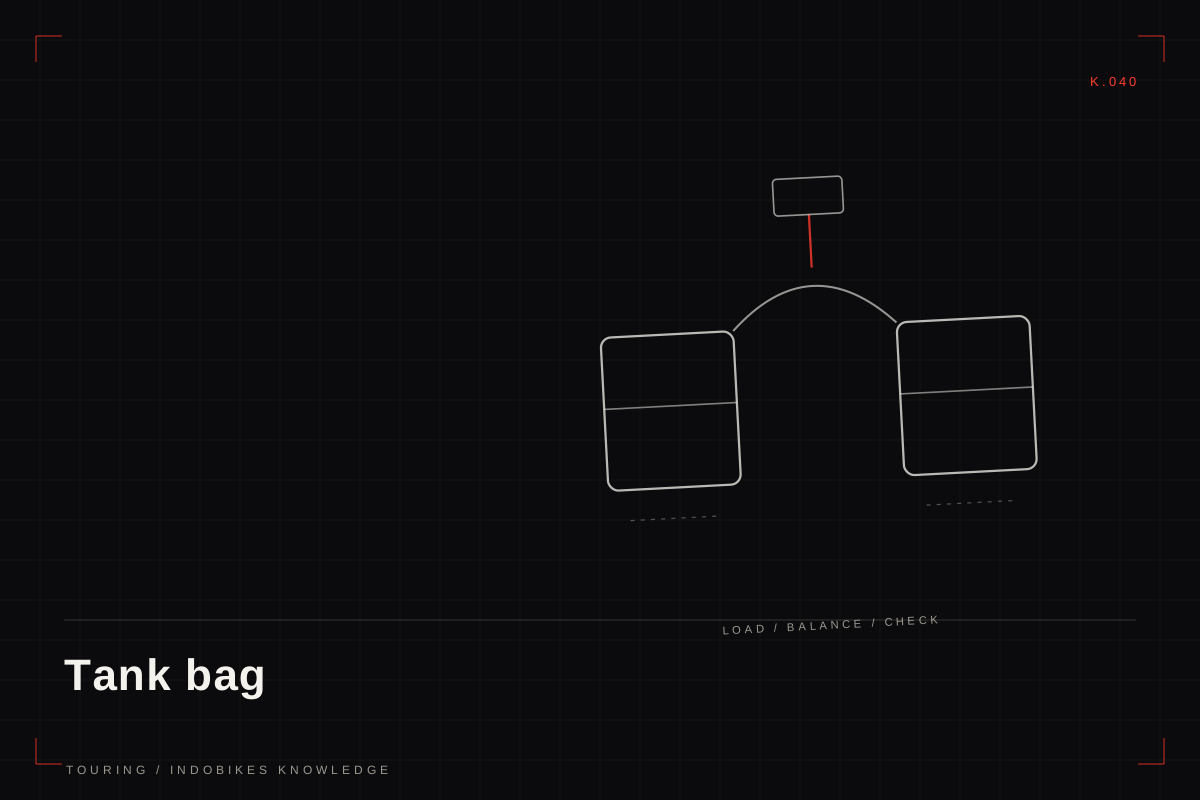
| Side cases | Adds mass low and wide; needs left-right balance | Bulk of the luggage |
| Top box | Raises the centre of mass and sits behind the rider | Light, bulky items only |
| Tank bag | Keeps small items in reach with little effect | Documents, phone, rain shell |
| Tail roll | Moves mass rearward and can lighten the front | Soft, light bedding or clothing |
Mass, height and the pendulum effect
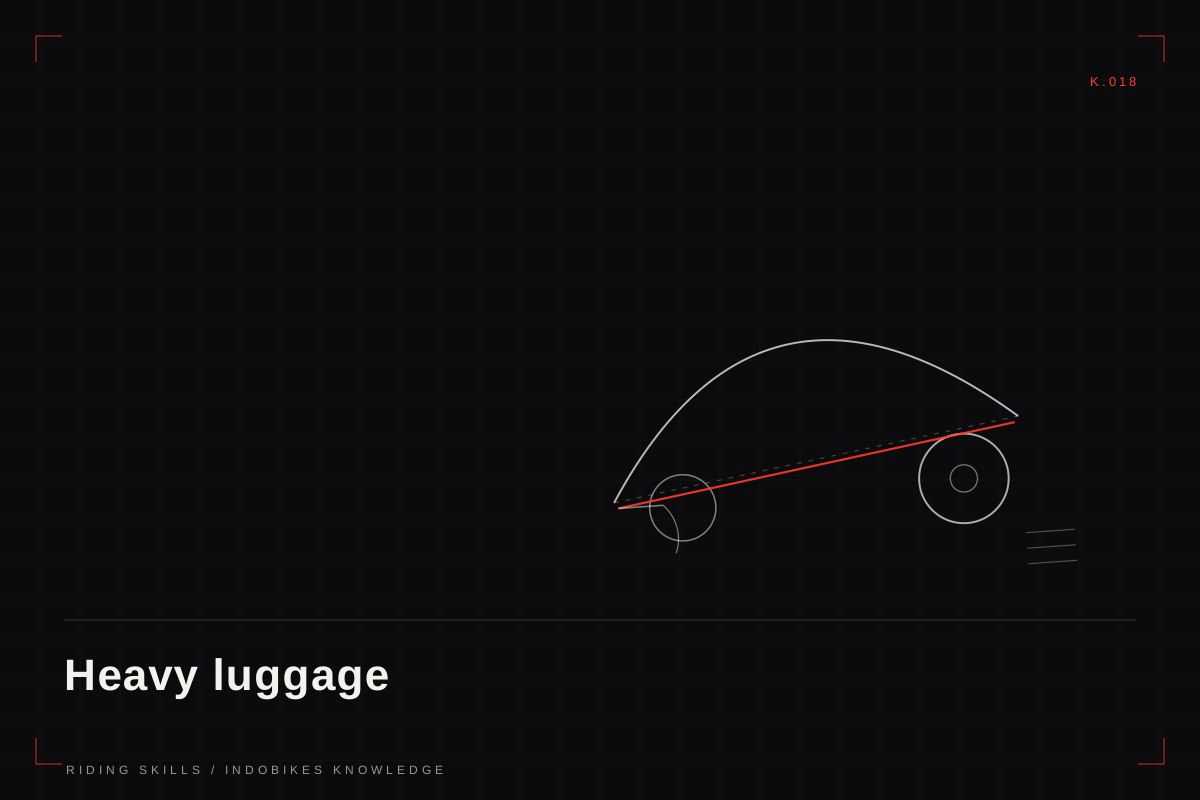
A motorcycle responds to where its mass sits, not only how much there is. Weight carried high raises the centre of mass and increases the distance from the steering axis, so the bike rolls more slowly into a turn and needs more effort to stop rolling. Weight carried far behind the rear axle acts like a pendulum, magnifying every correction and every gust.
That is why two loaded bikes with the same total weight can feel completely different. A low, compact load can be almost unnoticed; the same mass in a tall top box and a tail roll can make the front vague and the steering heavy. The fix is usually repositioning, not buying lighter equipment. Move the same load lower and the difference is immediate.
Low and central beats big and far away
Put the dense items low and near the middle: tools, water, spare parts, heavy food and anything with a hard edge. Use side cases or saddlebags for the bulk of the load and keep the top box for light, bulky items such as a rain shell, a jacket or a sleeping bag. A tank bag should carry only what you need in reach.
Resist the temptation to hang everything off the rear. A tail-heavy bike lightens the front tyre, which reduces steering feel and braking stability, especially with a passenger. If the bike has a rear rack with a low limit, respect it; the figure is in the owner's manual, not in the rack's marketing photograph. If the rack has no stated limit, ask the manufacturer or a workshop before loading it heavily.
Balance left and right
Load both sides as evenly as you can. A single heavy side bag makes the bike lean slightly and forces the rider to hold a small correction all day. That correction is tiring, and it becomes more noticeable in crosswinds and at low speed. Weigh the bags by hand or with a luggage scale if you are unsure.
If one side must carry more, put the heavier item low and as close to the centre line as possible, and compensate with lighter items on the other side. Check the balance with the bike on its centre stand or against a wall, then confirm on a straight, quiet road. A bike that pulls to one side with the load is not ready for a long day.
Front and rear: two different problems
Rear load lightens the front and can make the steering feel remote. In severe cases it contributes to a weave or a headshake, particularly with worn tyres or a top box mounted far back. Front load does the opposite: it slows the steering, increases fork dive under braking and can make the bike feel clumsy at low speed.
The answer is not to avoid luggage but to keep the mass inside the wheelbase and low. Check the bike's payload limit and the tyre pressure recommendation for a loaded bike in the owner's manual. If the load is close to the limit, a suspension adjustment may be needed; the correct range and method are in the manual or with a workshop.
Passenger plus luggage
A passenger and luggage together are the hardest load case. The passenger sits high and behind the rider, and a top box behind them moves the mass even further back. The front can feel very light, the rear suspension works harder, and the bike needs more room to stop. Adjust the plan, not just the preload.
Set tyre pressures and suspension for the load as the manual describes, then ride the first few kilometres gently to feel how the bike responds. Brief the passenger about mounting, holding on and leaning with the bike. If the combined load exceeds the bike's stated limit, the honest answer is to travel lighter or use a different bike.
Mounts, straps and movement
A moving load is worse than a heavy one. Check that every strap is tight, every buckle is locked and every rack bolt is secure. Straps can stretch in rain, and a bag that was firm at departure can settle after a rough section. Stop and check after the first broken surface, not only at the end of the day.
Keep straps and loose ends away from the wheel, the chain, the brake disc and the exhaust. Heat can soften a synthetic strap or melt a bag that touches a hot muffler. Do not trap a brake line or a wiring loom under a pannier, and make sure the luggage cannot shift into the rider's back under braking.
Test the load before the first long day
Load the bike as it will be loaded and ride a short loop that includes a low-speed turn, a stop and a stretch of rough surface. Feel for a front end that has gone vague, a rear that bottoms out or a bag that moves. Make the adjustments before the trip, when you still have options and time.
On the road, recheck the load after the first hour and after any long rough section. If the bike feels unstable, slow down and stop; do not try to ride around a mounting problem. A few minutes spent repositioning weight is the cheapest handling improvement available. A strap that has loosened is easier to fix at the roadside than a cracked rack or a damaged panel.
Checklist
- Put dense items low and close to the centre of the bike.
- Keep the top box for light, bulky items only.
- Balance the left and right sides before riding.
- Check the payload limit and loaded tyre pressures in the owner's manual.
- Keep straps, loose ends and bags clear of wheels, heat and brake lines.
- Recheck the load after the first rough section.
- Slow down and stop if the bike feels unstable; reposition rather than push on.
Questions
Is a top box bad for handling?
Not inherently, but it places mass high and behind the rear axle, which has the largest effect on steering feel. Keep it light, mount it as far forward as the rack allows, and do not exceed the rack or payload limit.
Can I carry a passenger and full luggage?
Only within the bike's stated payload and only with the tyres and suspension set for that load. Many small bikes reach their limit with a passenger and a modest bag, so check the manual before assuming it is fine.
Does luggage affect tyre pressure?
Yes. A loaded bike usually needs a different pressure from a solo bike, and the correct figures are in the owner's manual or on the tyre placard. Check them cold and adjust before the load goes on.