Heavy luggage changes a motorcycle in three ways: it adds mass, it raises the centre of gravity and it can move. Keep the load within the bike's stated limit, carry it as low and as central as possible, strap it so it cannot shift, and adjust suspension and tyre pressures for the load before you leave.
Find the limit before you pack
Every motorcycle has a maximum load figure, usually in the owner's manual and sometimes on a frame plate. It covers rider, passenger, luggage and accessories together, not luggage alone. Panniers, racks and top boxes also have their own limits, and a rack rated for a light bag is not a place to strap a full crate.
Weigh the load honestly, including water, tools and anything you buy on the way. A bike that is within its limit but has all the weight high and behind the rear axle still handles badly. The limit is a ceiling, not a target, and leaving a margin improves braking, steering and tyre life. Weigh the bags on a household scale if you are unsure.
Low and central beats big and high
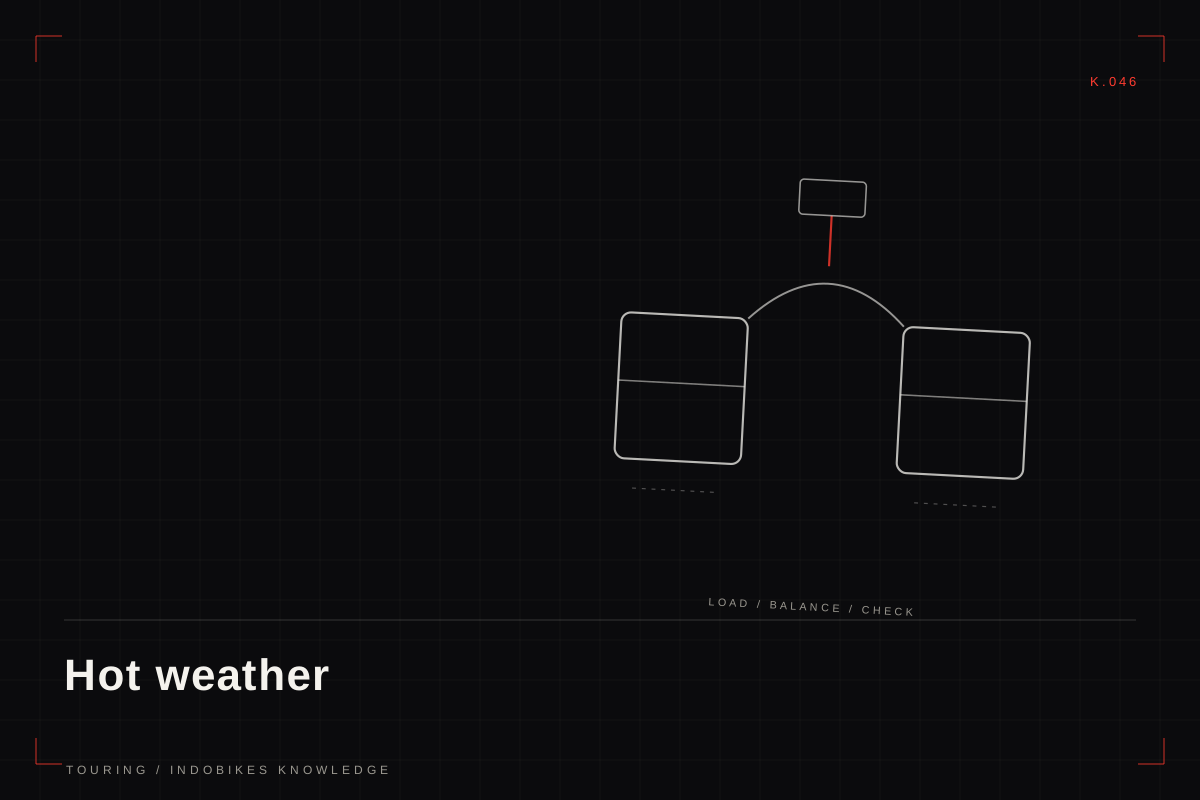
Weight carried low and near the bike's centre of mass has less effect on handling than the same weight high on a top box or far behind the rear wheel. Keep heavy items at the bottom of panniers or side bags, and reserve the top box for light, bulky things such as rain gear or a helmet.
Distribute side to side as evenly as you can. An unbalanced load makes the bike lean differently in left and right corners and can cause a steady pull. If you must carry something heavy on one side, offset it with something comparable on the other, or move it to a central position. Check the balance by walking the bike before you ride it.
Strapping: the loads that move
A load that shifts mid-corner is more dangerous than a heavier load that stays put. Use straps with cam buckles or ratchets, route them so they do not rub paint or press on brake lines, and check them again after the first few kilometres. Vibration and bumps loosen straps that felt tight in the driveway.
Do not trap straps in the suspension, wheel or chain, and do not cover lights, indicators or the number plate. Loose items such as a rain jacket should be packed, not tied on the outside where they can flap, work loose or enter the rear wheel. If a load needs a warning flag or marker because it extends beyond the bike, fit one.
Suspension and tyre response
Extra weight compresses the rear spring and changes the bike's ride height and steering geometry. Most manuals give preload settings for a loaded bike; set them before the trip and check the sag with the load aboard. Too little preload makes the bike sit low at the rear and steer heavily; too much makes it harsh and skittish.
Tyre pressures usually rise for a loaded bike, again according to the manual. A loaded tyre deflects more, heats more and wears faster, so check pressures cold and inspect the sidewalls for cracking or bulging. If the bike wallows or the rear feels vague, stop and check the load and pressures rather than riding around the symptom.
Riding behaviour with mass aboard
Braking distances grow and the fork dives more, so start braking earlier and keep the application smooth. Acceleration is slower, which matters when joining traffic or overtaking: the gap you would use solo may not be enough loaded. Plan overtakes with a larger margin and be willing to wait. A loaded bike also takes longer to slow from speed, so plan further ahead.
Crosswinds affect a loaded bike more because there is more surface area and a higher centre of gravity. Expect the bike to be pushed and hold a steady line rather than correcting sharply. On descents, use engine braking and avoid riding the brakes for long periods; the extra mass puts more heat into the discs.
Slow-speed and parking with a loaded bike
At walking pace the load makes the bike heavier to hold and quicker to tip once it passes the balance point. Turn more slowly, use a wider arc and avoid stopping on a camber or loose surface where a foot may not find grip. If in doubt, get off and push the bike rather than balancing it on a slope.
Park where the ground is firm and the bike will not sink or roll. A loaded side stand carries more weight, so check that it is fully extended and that the surface under it is solid. Take the heaviest bags off before manoeuvring into a tight space if that makes the difference between control and a tip-over.
Checks during the trip
Stop after the first twenty or thirty kilometres and check straps, racks, pannier latches and tyre pressures. Then repeat at fuel stops. Roads and vibration work fasteners loose, and a rack bolt that was tight at home can be finger-loose after a rough section. Carry a few spare straps and the tools to tighten what you fitted.
Watch for changes in handling that suggest the load has moved: a new pull to one side, a wobble at speed, a different steering feel or a scraping noise. Stop and investigate. A load that has shifted is a fault, not a characteristic, and continuing because the destination is close is how a manageable problem becomes a crash.
Checklist
- Check the manual for the maximum load and rack limits.
- Pack heavy items low and near the centre of the bike.
- Strap everything so it cannot shift, and recheck after stops.
- Set suspension preload and tyre pressures for the load.
- Brake earlier and allow more room for overtaking.
- Stop and investigate any new wobble, pull or noise.
Questions
How much weight can a motorcycle carry?
The figure is specific to the model and is usually printed in the owner's manual, sometimes on a frame plate. It includes the rider, passenger and all luggage. Use that number rather than a general rule, and stay below it so the bike keeps a margin for braking and steering.
Is a top box bad for handling?
It is convenient but places weight high and behind the rear axle, which has more effect on stability than the same weight in panniers. Keep it light and put heavy items low and central. Check the box and rack limits, and slow down in crosswinds.
Can I carry luggage on the tank?
A tank bag is a good place for light items because the weight is central and low. It must not interfere with the bars, controls or your view of the instruments, and it must be secure. Avoid heavy items there, and check that it does not trap cables or scratch the paint.