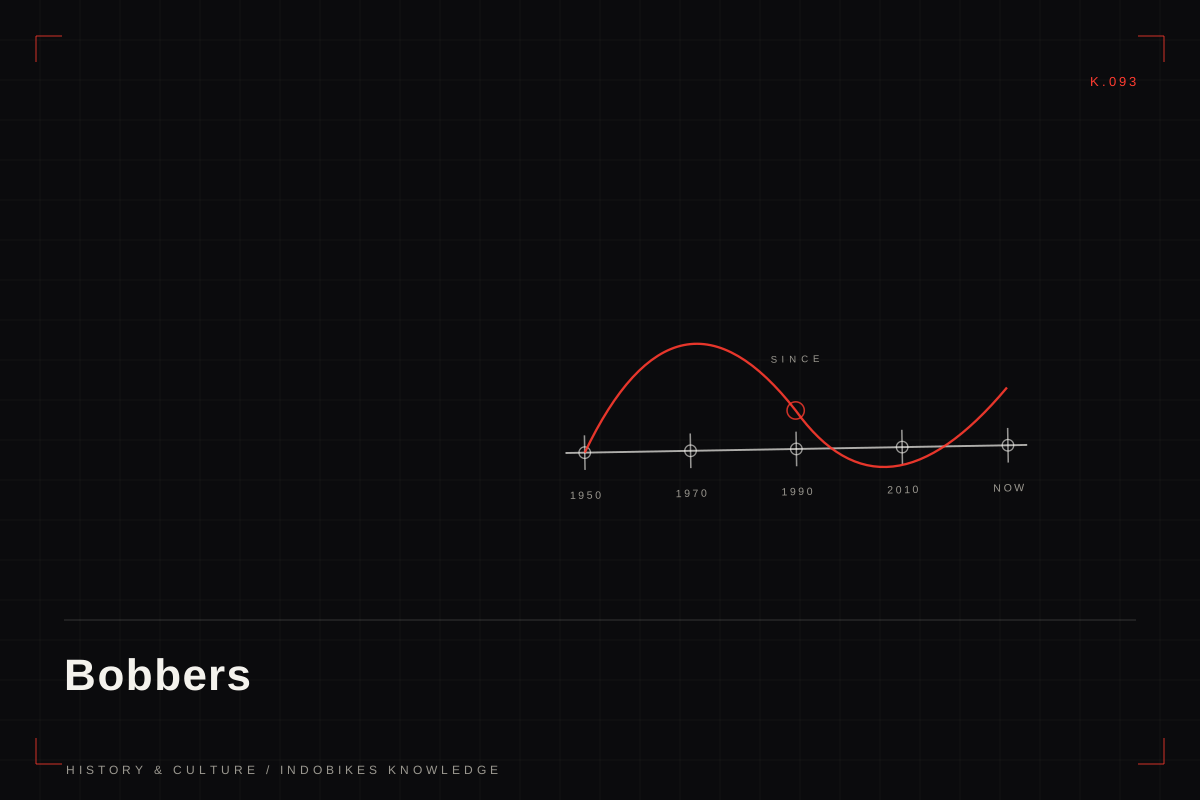
The bobber came from American riders in the 1930s and 1940s who removed parts to make a production motorcycle lighter and faster. Fenders were shortened, bodywork was stripped and the seat was lowered. The style spread after the Second World War and shaped later custom movements.
The logic of removal
Early custom motorcycles were not built for shows. Riders removed weight because a lighter bike accelerated and handled better with the engines and brakes available at the time.
Fenders were bobbed, hence the name, to reduce weight and avoid damage on rough roads. Passenger seats, windscreens and crash bars came off. The result was a machine that looked purposeful because it was.
The post-war scene
After the Second World War, surplus motorcycles and returning riders fed a custom culture in the United States. The bobber was one of its first expressions, alongside early choppers.
The distinction between a bobber and a chopper is partly about the front end. A chopper typically extends the forks and changes the frame geometry; a bobber keeps a more standard stance and focuses on removing material.
What a classic bobber changed
A shortened rear fender, a solo seat, wider bars and a small tank are common signatures. The riding position is often low and upright, and the bike is deliberately minimal.
That minimalism has practical costs. A short rear fender throws water, a small tank reduces range and a hardtail or lowered suspension can be uncomfortable. The original riders accepted those trade-offs because the bike was built for a specific place and purpose.
The modern bobber
Factories now sell bobber-styled models, and custom shops build them with modern brakes, suspension and electrical systems. The visual language is retained, but the engineering underneath is often much better.
A good modern bobber keeps the proportions and the minimal look without making the bike unsafe. A bad one removes the front fender, lowers the suspension until it bottoms out and fits a tyre that rubs the frame.
Hardtail, suspension and the ride quality question
The original bobbers often had rigid frames because that is what was available. A hardtail has no rear suspension, so the tyre and the seat do most of the work. On smooth roads it is tolerable; on broken surfaces it is punishing, and it stresses the frame and the rider.
Modern bobber builds usually keep suspension and lower the rear instead. That reduces travel, and a bike that bottoms out on a pothole can damage the tyre, the rim or the frame. If the bike is lowered, the spring rate and damping need to match the new travel.
The seat is the other half of the equation. A thin solo seat looks right and transmits every bump. A sprung seat or a thicker pad improves comfort without changing the silhouette much, and it is a better compromise than lowering the bike further.
Ape hangers and forward controls change the riding position dramatically. They can look dramatic and make the bike harder to control at low speed, because the rider has less leverage and the weight is further back. Test the position before committing to it.
Building one without pretending
Decide whether the bike will be ridden in rain and at night. If it will, keep a front fender and a legal, effective light. If it is a show bike, say so and do not market it as a daily rider.
Check the frame, brakes, steering and tyre clearance before cosmetic work. The bobber look is simple, which means every remaining part is visible and every compromise is obvious.
Rear tyre width is another trap. A wide tyre on a narrow rim distorts the profile and can rub the chain or the fender. The bobber look often uses a fat rear tyre, but the frame and swingarm have to accept it without compromising the chain line.
Footpeg position and ground clearance are easy to overlook. Forward controls move the rider's feet away from the engine, which can be comfortable on a long straight road and awkward in slow traffic. Lowering the bike without adjusting the pegs can also reduce cornering clearance.
Checklist
- Start with a sound frame and legal documents.
- Keep a front fender if the bike will be ridden in rain.
- Check tyre clearance and suspension travel before lowering.
- Use a seat that supports the riding position.
- Keep lighting and noise within local rules.
- Accept the range and comfort limits of a small tank.
Questions
What is the difference between a bobber and a chopper?
A bobber usually keeps standard frame geometry and removes parts to save weight. A chopper typically modifies the frame and front end, often with extended forks.
Why are bobber fenders so short?
Originally to save weight and reduce damage. Today it is mostly a style choice, with the practical downside of throwing water and debris.
Can a bobber be a daily rider?
Yes, if it keeps a front fender, effective lighting, usable suspension and a seat that suits the rider. Many show-oriented bobbers are not practical in rain or traffic.