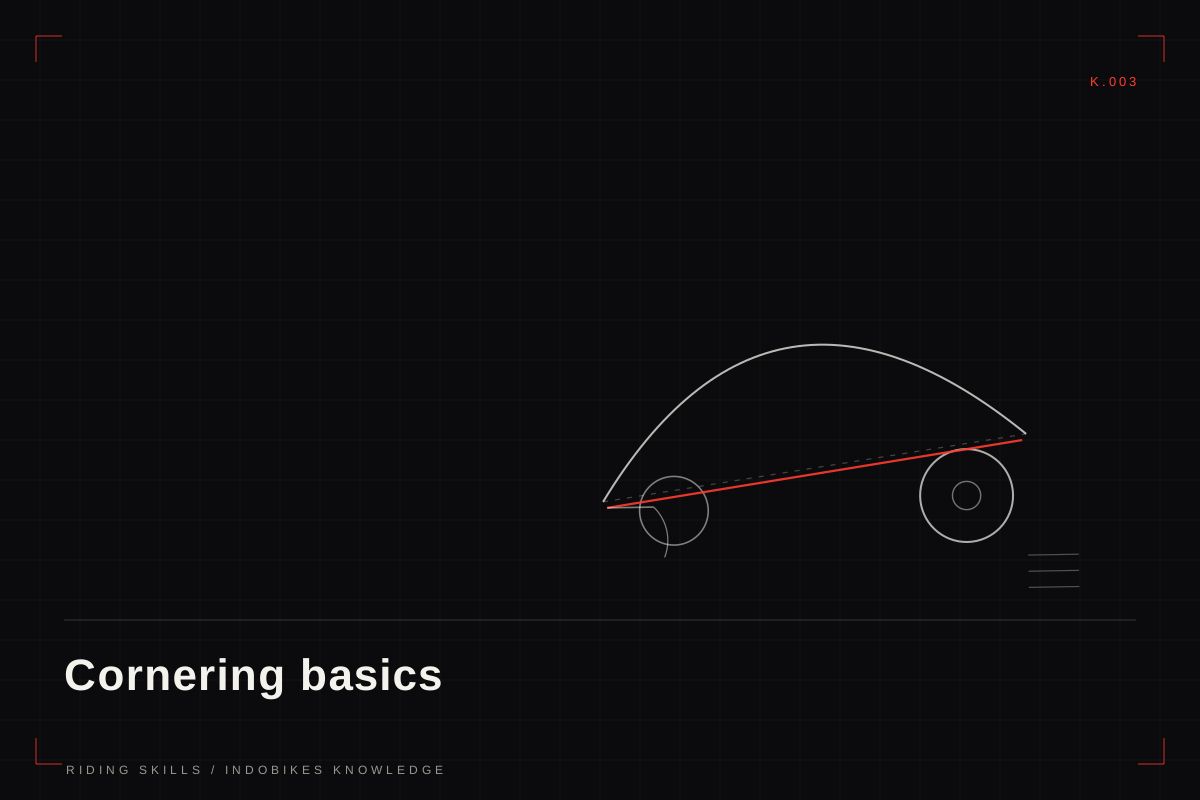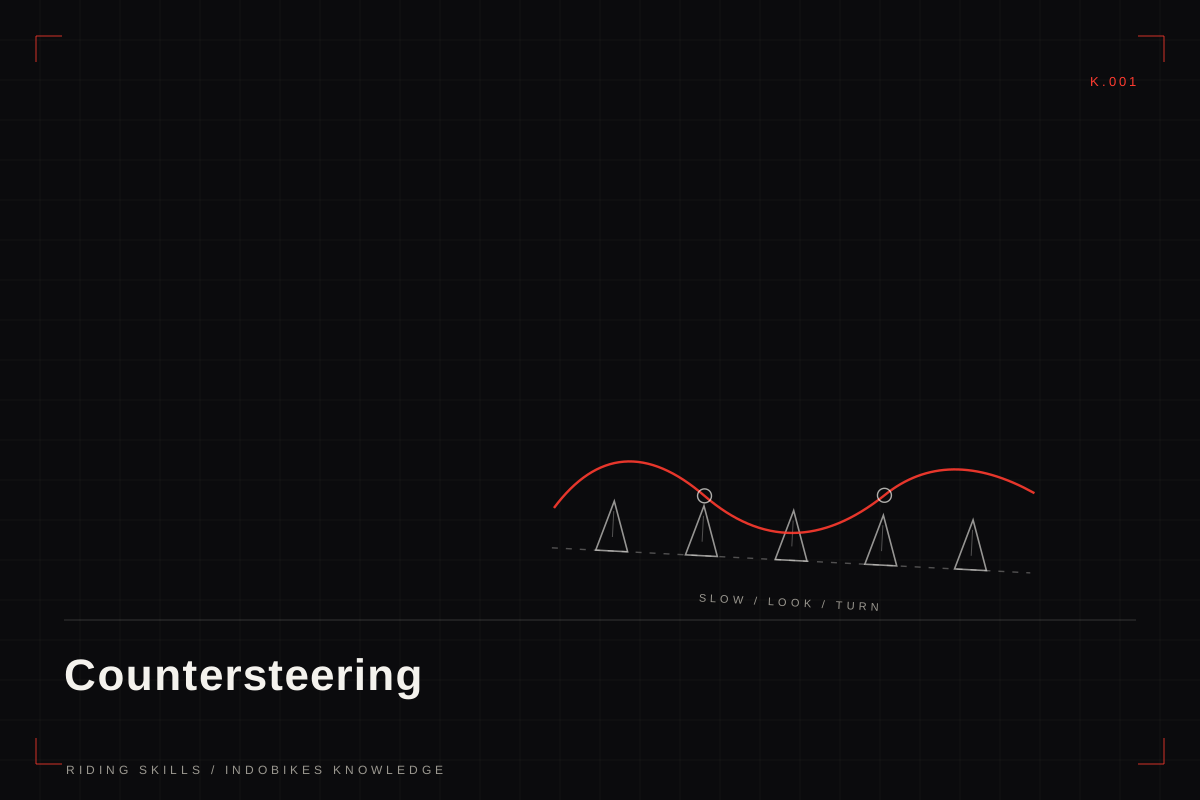
To turn right at normal road speed, a rider presses the right handlebar forward. The bike first leans right, then follows the curve. That is countersteering, and it is how every two-wheeled vehicle above walking pace changes direction, whether the rider is aware of it or not.
What countersteering actually is
Countersteering is a steering input made in the opposite direction to the turn: press the right bar to go right, press the left bar to go left. The front wheel briefly points away from the corner, the machine rolls toward the corner, and the wheel then re-establishes a natural steering angle as the bike settles into the curve.
It is not an advanced trick reserved for sport riders. It is the normal steering mode of a single-track vehicle above walking pace. Riders who believe they steer only by leaning are usually countersteering without noticing: they push the inside bar, or they weight the inside peg and let the bars move.
Below walking pace the physics reverses. A slow motorcycle steers directly, like a bicycle: turn the bar toward the direction you want to go, and the bike follows. This is why a U-turn at 5 km/h and a corner at 60 km/h feel like two different machines.
Why the bike turns this way
A motorcycle stays upright because its centre of mass sits above the contact patches and its steering geometry keeps correcting small disturbances. Trail, the distance between the steering axis and the tyre contact patch, makes the front wheel want to follow the direction of travel. Rake and trail also make the front end drop slightly as it turns, which helps the bike self-centre.
When you press the bar, you move the front contact patch sideways. The tyres now generate a lateral force at the ground while the centre of mass continues forward, and that offset creates a roll moment. The bike leans. Once it is leaning, the geometry finds a steering angle that balances the turn, and the machine tracks through the corner.
Gyroscopic effects from the spinning wheels are part of the picture, but they are not the whole explanation, and repeating that they are is where a lot of internet physics goes wrong. At road speeds, steering geometry, mass distribution and tyre forces do most of the work. You do not need the equations to ride well, but you do need to accept that the input is a press, not a pull.
The speed where it starts
There is no single threshold that applies to every motorcycle. The change becomes noticeable somewhere above walking pace, often around 15 to 20 km/h, and depends on wheel size, steering geometry, tyre profile and load. A scooter with small wheels and a short wheelbase feels different from a touring bike, but both countersteer.
The practical point is not the exact number. It is that the transition is gradual. At very low speed, steering is direct and the bars feel heavy. As speed rises, the same bars feel lighter and the bike responds to pressure rather than rotation.
How to learn it without a road experiment
Learn on a closed surface with an instructor, or on a course designed for it. A public road is the worst place to discover a new steering input: traffic, surfaces and consequences all remove the margin you need to make mistakes.
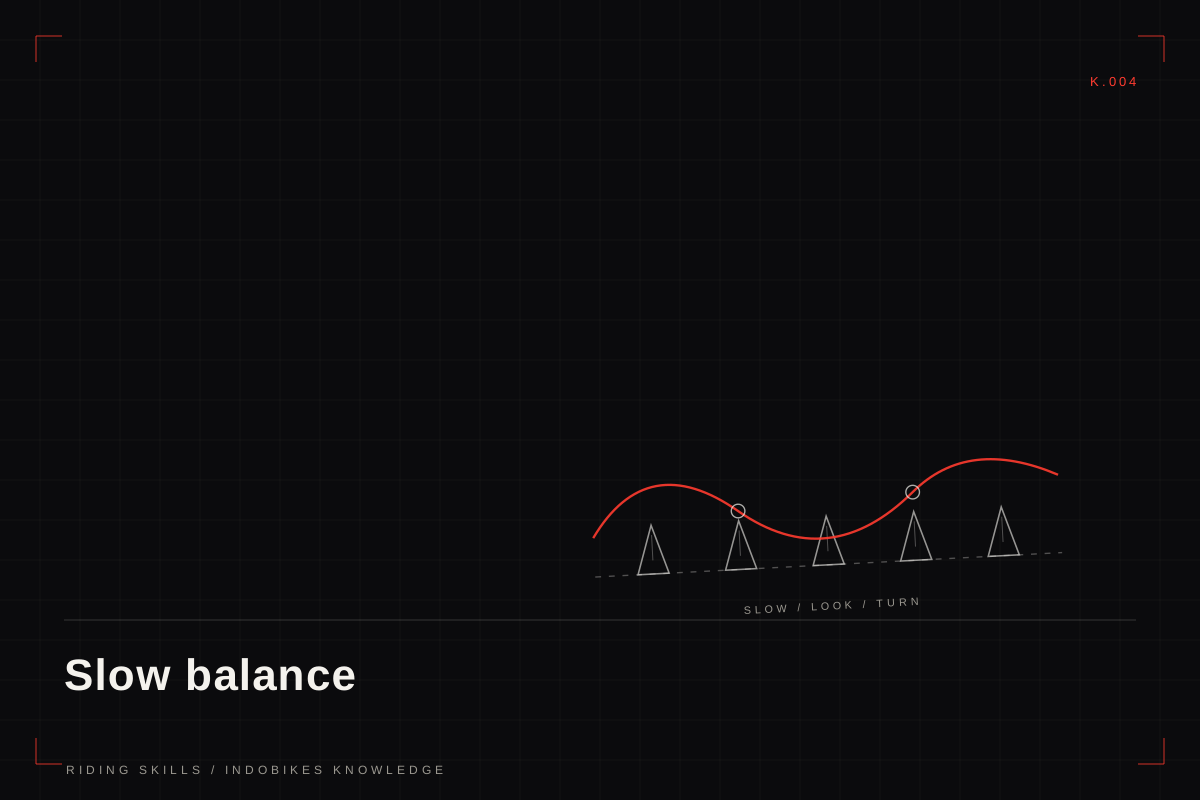
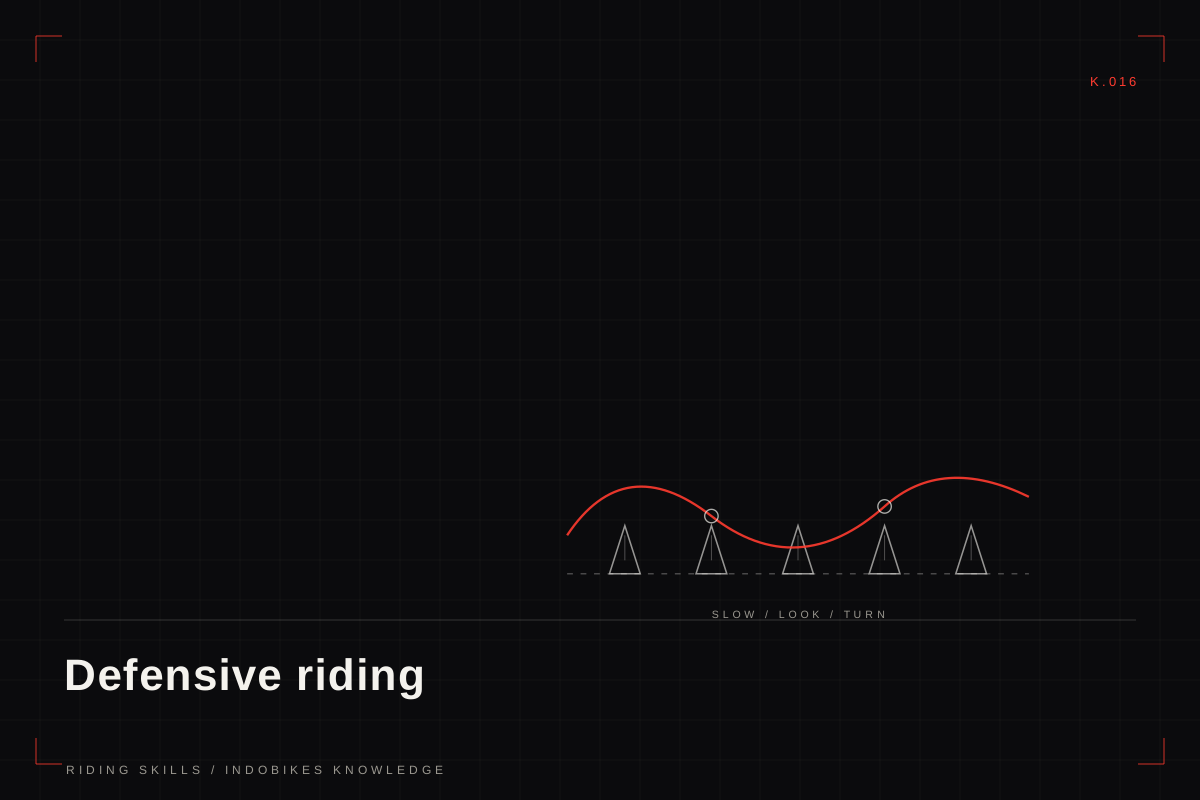
A basic exercise: ride a large figure-eight at a steady, moderate speed in second gear. Look through the turn, keep the throttle steady, and press the inside bar. Let the bike lean and complete the turn, then press the other bar for the next arc. Keep your arms loose and your grip light. The bike will do most of the work if you stop fighting it.
If the bike feels like it is falling into the corner, you are probably adding lean without enough speed, or chopping the throttle. If it runs wide, you are probably looking at the outside of the turn or asking for too little input. Both are instructor-level corrections, not things to solve at 70 km/h on a main road.
Mistakes that make it feel dangerous
Gripping the bars hard is the most common error. A tense rider cannot feel the front tyre, and the inputs become abrupt. Hold the bars like you would hold a small bird: firm enough to control, loose enough not to crush.
Pulling the outside bar instead of pressing the inside bar feels similar for a moment and then goes wrong, because it unloads the front and slows the roll. Press, do not pull.
Braking in the middle of a lean, closing the throttle suddenly, or staring at the edge of the road all reduce the margin the tyre needs. On a wet or gravel surface the same input can ask for more grip than exists, and the front will slide.
Finally, do not practise countersteering in traffic to see whether it works. The technique is real, but a surprised rider in a live lane is a hazard to everyone around them.
Where it fits in a riding course
In a structured course, countersteering is usually introduced after basic control: starting, stopping, slow-speed balance and a feel for the brakes. It belongs with cornering, because the two are the same skill seen from different angles.
In Indonesia, a valid licence and formal training are the baseline, not an optional extra. A course gives you a closed area, an instructor who can see your inputs and a machine that is fit for practice. Those three things are worth more than any written explanation, including this one.
Limits and conditions
Countersteering still applies on wet roads and gravel, but the amount of lean the tyres can support is lower and the penalty for a rough input is higher. Smoothness matters more than the size of the press.
Strong crosswinds add a sideways force that the bike must counter. You may need to hold a small steering input into the wind while the bike tracks slightly angled. That is normal, and it is not a reason to wrestle the bars.
At walking pace, in a car park or a queue, revert to direct steering. Trying to countersteer a slow U-turn is a reliable way to drop the bike.
Checklist
- Wear a helmet, gloves, boots and a jacket for any practice session.
- Use a closed area with a clean surface and no traffic.
- Check tyre pressures and brake function before you start.
- Keep the throttle steady and the grip light.
- Look through the turn, not at the front wheel.
- Stop the session when you feel tired or frustrated.
Questions
Will the bike turn if I just lean?
At normal road speed, leaning alone produces a small steering response because the geometry steers the front wheel as the bike rolls. It is slower and less precise than a deliberate press on the inside bar, and it gives you less control when you need to tighten the line.
Is countersteering safe to practise on the street?
No. Practise on a closed course with an instructor. The street adds traffic, uncertain surfaces and no run-off, which is exactly the wrong environment for learning a new input.
Does countersteering work on a scooter?
Yes. Any two-wheeled vehicle above walking pace countersteers. Scooters with small wheels may feel quicker to respond, but the principle and the input are the same.