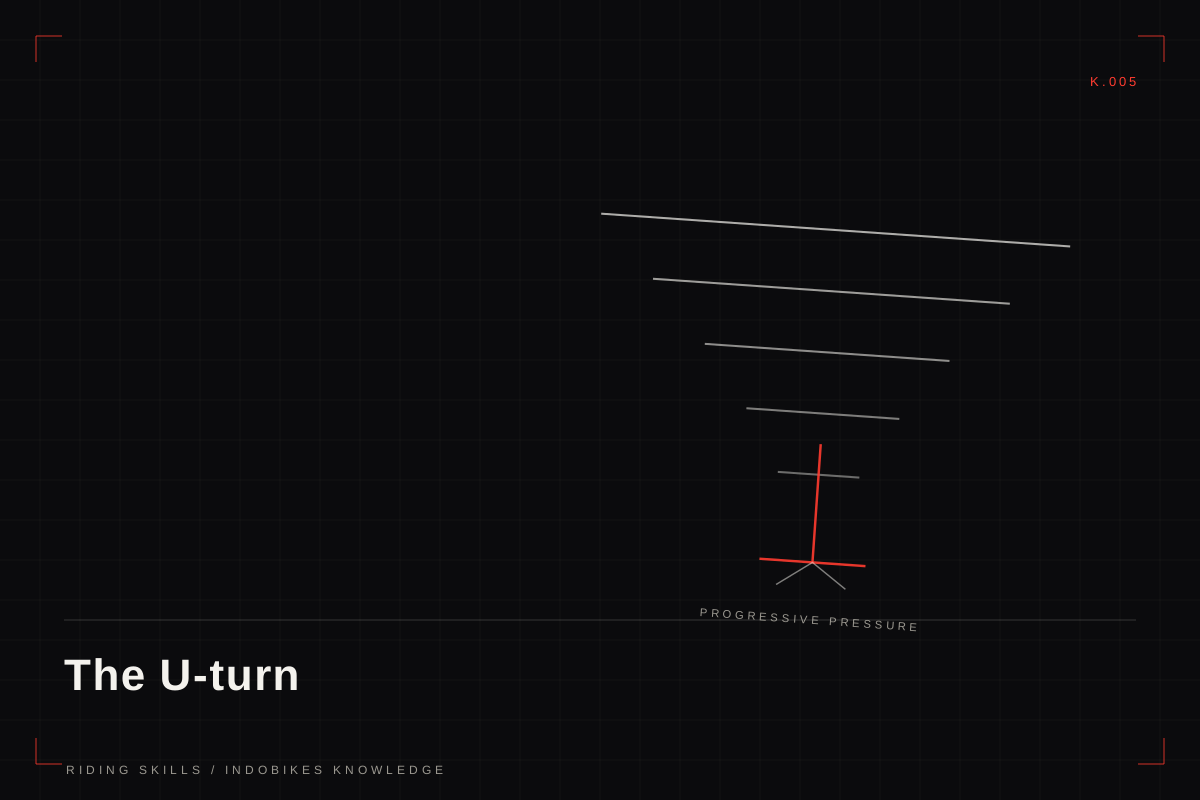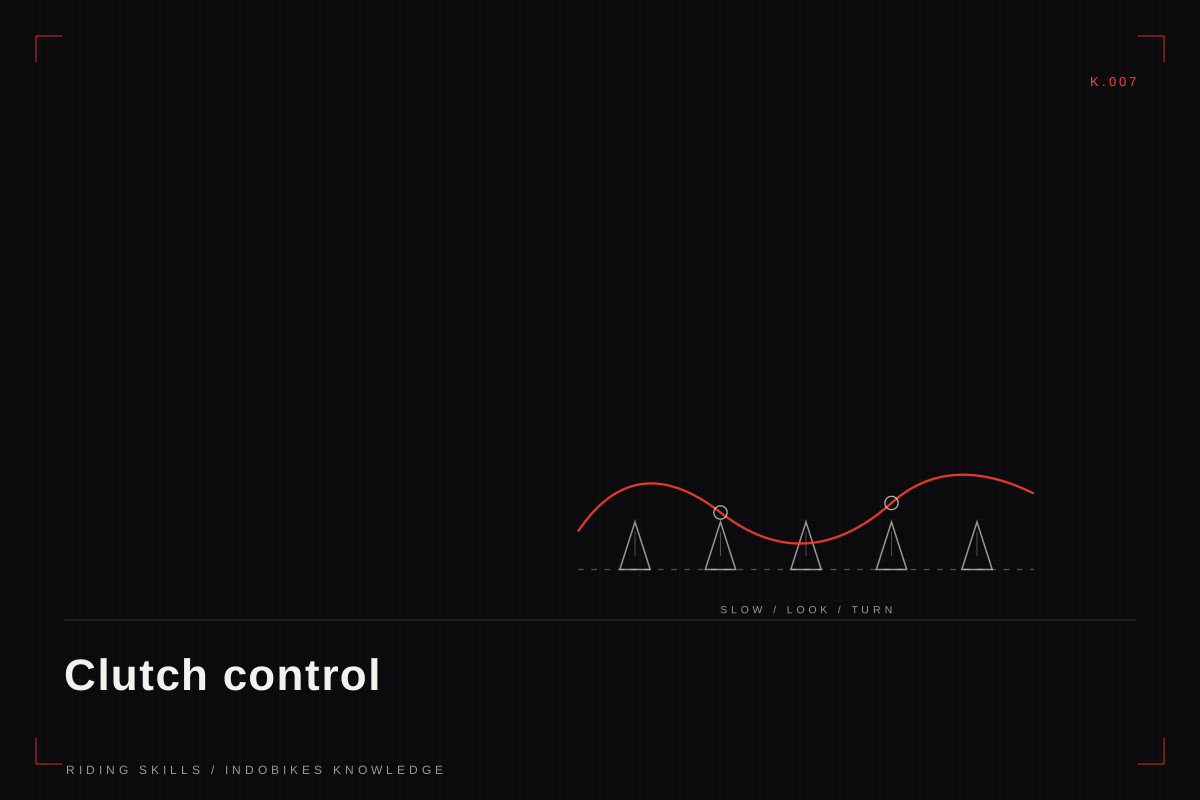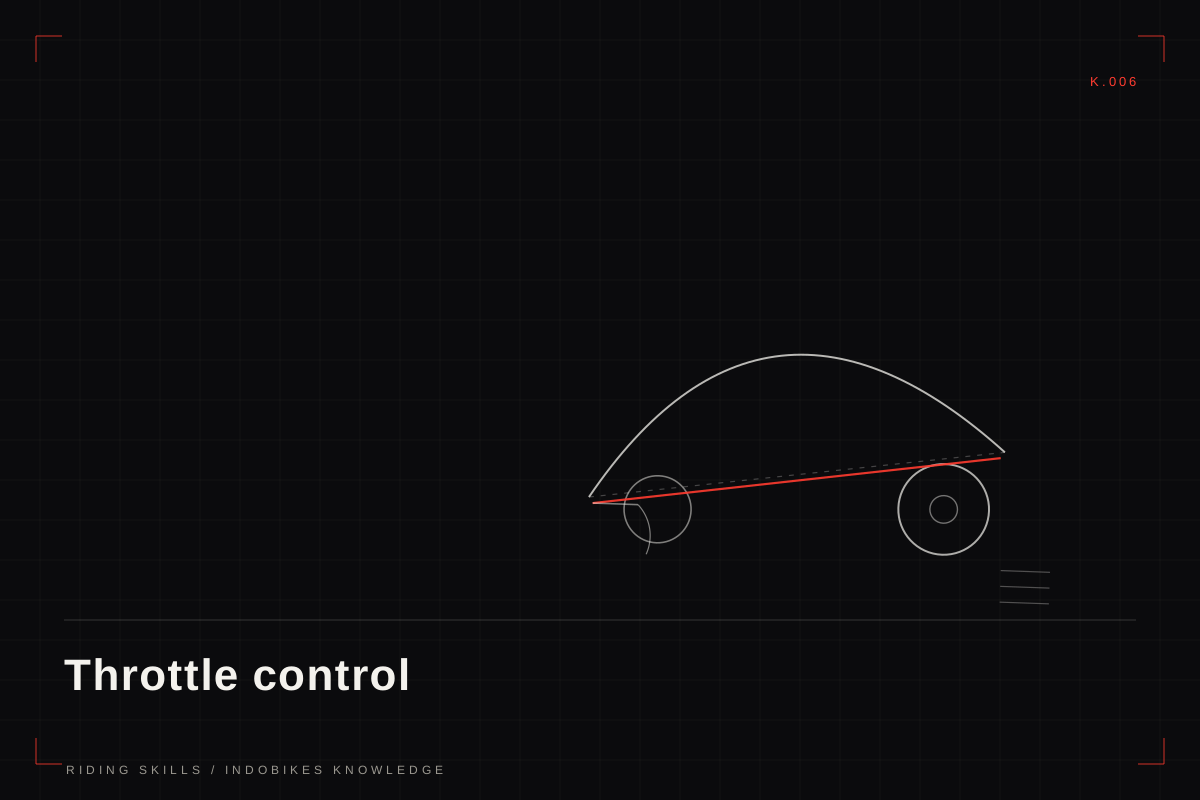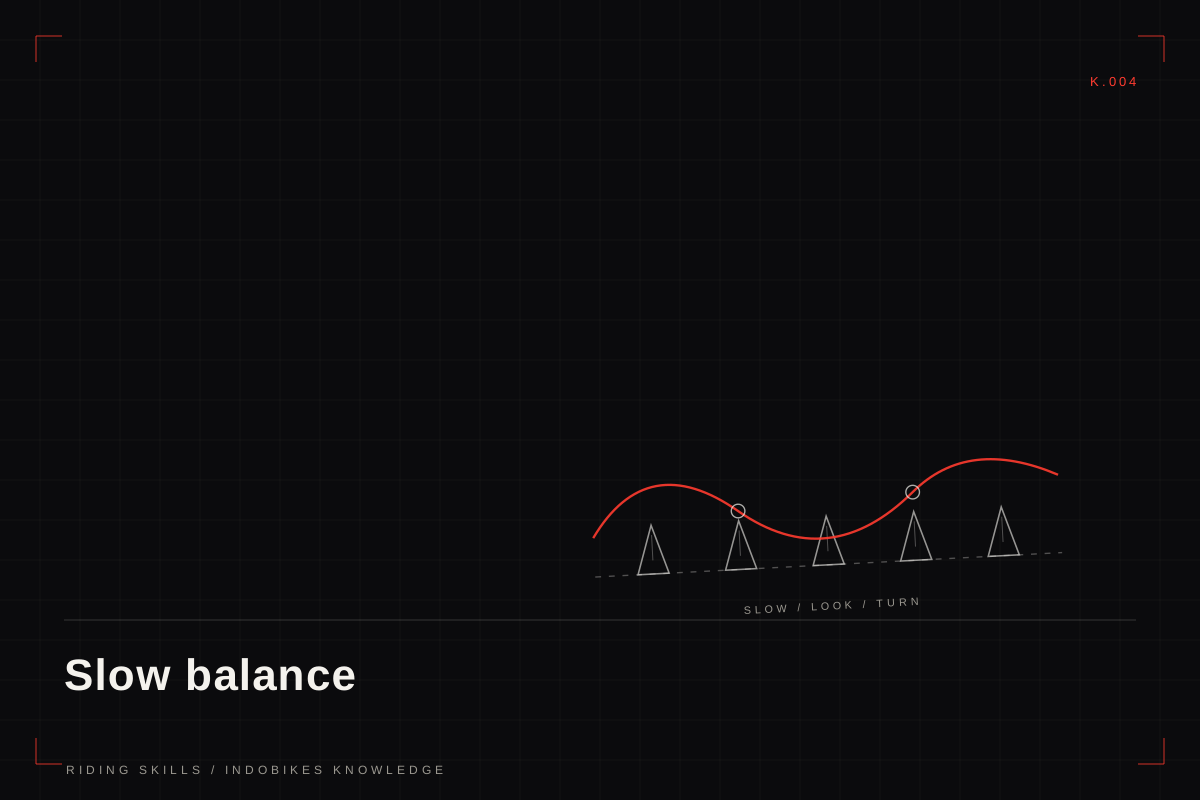
Below walking pace a motorcycle loses the self-correcting steering that keeps it stable at speed, so balance has to come from the rider. The reliable method is to keep light drive to the rear wheel, slip the clutch against a trailing rear brake, look where you want to go and let the bike move underneath you.
Why slow riding feels like a different machine
At walking pace the front wheel no longer has enough forward motion to steer itself back under the bike. The stabilising effect of steering geometry depends on the wheel rolling fast enough to generate a correcting force, and below that speed the machine behaves like an inverted pendulum: lean it a little and it keeps going.
That is why a bike that feels planted at 40 km/h can feel precarious at 5 km/h. The rider has not suddenly become less skilled; the machine has stopped helping. Balance has to be supplied deliberately, through drive, brake and gaze, until the bike is moving fast enough to look after itself again. That is a skill rather than a talent, and it improves quickly with short, deliberate practice.
Drive is the balancing tool
Light drive to the rear wheel is the most useful balancing tool at low speed. Torque at the contact patch keeps the rear tyre loaded and the chassis taut, and it gives the rider a way to counter a lean by adding a little more push. A bike coasting with the clutch pulled in has no such tool, and it will feel vague and tippy.
The amount of drive needed is small. A steady, barely open throttle in first gear is usually enough, with the clutch slipping to keep the speed low. The aim is a continuous, gentle pull rather than a series of surges, because each surge shifts the bike's weight and each pause lets it start to fall.
Clutch and rear brake as a pair
The clutch and the rear brake work together. The clutch friction zone sets how much engine torque reaches the wheel; the rear brake acts as a drag that holds the speed down. Used as a pair they let a rider set a walking pace with the engine comfortably above idle, which is smoother than trying to make the engine itself idle along.
On a scooter or automatic, the same job is done by the throttle against the rear brake. The CVT engages at a low engine speed and then multiplies torque as the revs rise, so the rider uses the brake to hold the bike back and the throttle to keep the drive engaged. Long periods of this heat the belt and clutch shoes, so keep it brief.
Where to look, and how to sit
Look where you want the bike to go, not at the ground in front of the wheel. The head leads the body, and the body follows the eyes; a rider staring at a pothole tends to steer into it. At walking pace the effect is stronger, because a small input produces a large change in direction.
Keep the upper body relaxed and let the bike move underneath you. Gripping the bars tightly transmits every wobble into the steering and makes the rider correct too much. Weight on the footpegs, elbows soft, shoulders down: the bike should feel like it is balancing beneath a still rider, not being held up by one.
Turning at walking pace
At walking pace, steering is direct. To turn left, the bars turn left and the bike follows. This is the opposite of the press-and-lean input that works at road speed, and mixing the two is one of the reasons slow turns feel awkward for riders who are otherwise confident in corners. The fix is to separate the two modes in your mind: slow means direct steering and drive, fast means press and lean.
For a tight turn, lean the bike a little more than your body and weight the outside peg. The machine turns around a smaller radius while the rider stays closer to upright, which keeps the tyres loaded predictably and leaves an escape if the front begins to slide on loose grit. With practice this becomes the natural way to turn at low speed, and it takes much of the fear out of a tight car park.
Drills that build the skill
Use a closed area with a clean, flat surface and no traffic. A figure eight, a slow race and a short cone weave cover most of what slow riding asks for: steering to full lock, holding a constant low speed and changing direction without putting a foot down. Fifteen minutes is enough for a productive session.
Judge progress by smoothness, not by how slowly you went. A rider who weaves cleanly at a steady pace is learning more than one who wobbles through at a crawl and nearly drops the bike. Stop when your arms tighten or your attention drifts; tired slow riding is how car-park drops happen. A short session repeated weekly beats one long session that ends in frustration.
When balance starts to go
The front brake is the enemy of a turned bar. Pulling it while the bars are at full lock folds the front wheel and the bike goes down almost instantly. If you need to slow during a tight turn, use the rear brake or a little less throttle, and straighten the bars before using the front.
Mechanical problems amplify every wobble. Soft tyres, worn steering-head bearings, a sticky throttle or luggage loaded high all make a bike harder to balance at low speed. If slow riding has become noticeably worse than it used to be, check those items before blaming technique. A quick check of those items costs less than a repair and often explains a sudden loss of confidence.
Checklist
- Find a closed, flat area with no traffic before practising.
- Set tyre pressures and check that the throttle returns freely.
- Keep light drive on and the clutch in its friction zone.
- Trail the rear brake to hold a constant walking pace.
- Look at your target, not at the front wheel.
- Weight the outside peg in tight turns.
- Stop the session when your arms or shoulders tighten.
Questions
Why does my bike want to fall when I turn slowly?
At low speed there is not enough centrifugal effect to hold the bike up, so any lean keeps developing. Keeping light drive to the rear wheel and a little rear brake gives the rider a way to catch that lean before it becomes a fall.
Is it bad to slip the clutch at low speed?
A wet clutch is designed to slip and is cooled by engine oil, so short periods of slipping in traffic are normal. Prolonged slipping under heavy load, such as a steep hill with a passenger, generates much more heat and should be avoided.
Do scooters need the same technique?
The principle is identical, but the controls differ. A scooter has no clutch lever, so the rider holds the rear brake and uses the throttle to keep the CVT engaged. Holding that balance for a long time heats the belt, so use it in short bursts.