Good throttle control means changing engine output in small, deliberate steps instead of on-off movements. A smooth roll-on loads the rear tyre gradually, a smooth roll-off transfers weight to the front, and either one keeps the suspension settled. Snatching the throttle does the opposite, and on a wet or gravel surface the difference is the whole margin.
What the twist grip is really doing
The throttle changes how much air the engine can draw, and the fuel system adds the matching fuel. The result is torque at the rear wheel, and torque at the contact patch is what actually moves the bike. At low revs a small rotation can be a large percentage change in output, which is why the same wrist movement feels gentle at speed and abrupt in a queue.
Throttle also moves weight. Opening it lifts the front and loads the rear; closing it does the reverse. That weight transfer pitches the suspension, changes the size of the contact patches and alters how much grip each tyre has left for turning or braking. A rider who thinks of the throttle as a speed dial misses most of what it does.
Roll, do not stab
Set the hand so the wrist can rotate smoothly through the range you need. A common starting point is a fairly flat wrist with the elbow slightly dropped, so the forearm can follow the twist instead of the wrist running out of travel. Take up any slack in the tube before you begin, so the first movement is already doing something.
The difference between quick and abrupt is the shape of the input, not its size. You can open the throttle briskly and still be smooth if the movement is continuous. What upsets a bike is the step change: a snatch open, or a sudden full closure that throws weight onto the front in one go.
Free play, cables and electronic throttles
A cable throttle needs a small amount of free play, as specified in the owner's manual. Too little and the engine may hang at idle or the throttle may bind when the bars are turned; too much and the response feels vague. Check that the twist grip returns on its own from full lock in both directions, with the engine off.
Ride-by-wire systems replace the cable with a sensor and a motor, but the twist grip still has a physical feel and a return spring. Electronic faults can produce a limp mode, an uneven idle or a delayed response, and diagnosis belongs with a workshop that has the right reader. Neither system removes the need for a smooth wrist.
Throttle through a corner
Once the bike is leaned and the line is set, the throttle's job is to hold the chassis steady. A light maintenance opening keeps the rear tyre loaded and the suspension in its working range. Roll on progressively as the bike stands up and the exit comes into view, because that is when more drive is safe.
Closing the throttle mid-corner shifts weight forward and can overload the front tyre just as it is asking for maximum cornering grip. If you need to slow, do it gently and earlier, before the lean. The old advice to be on or off the throttle is about avoiding a coasting, unsettled bike, not about snapping it open.
Traffic, low speed and automatic scooters
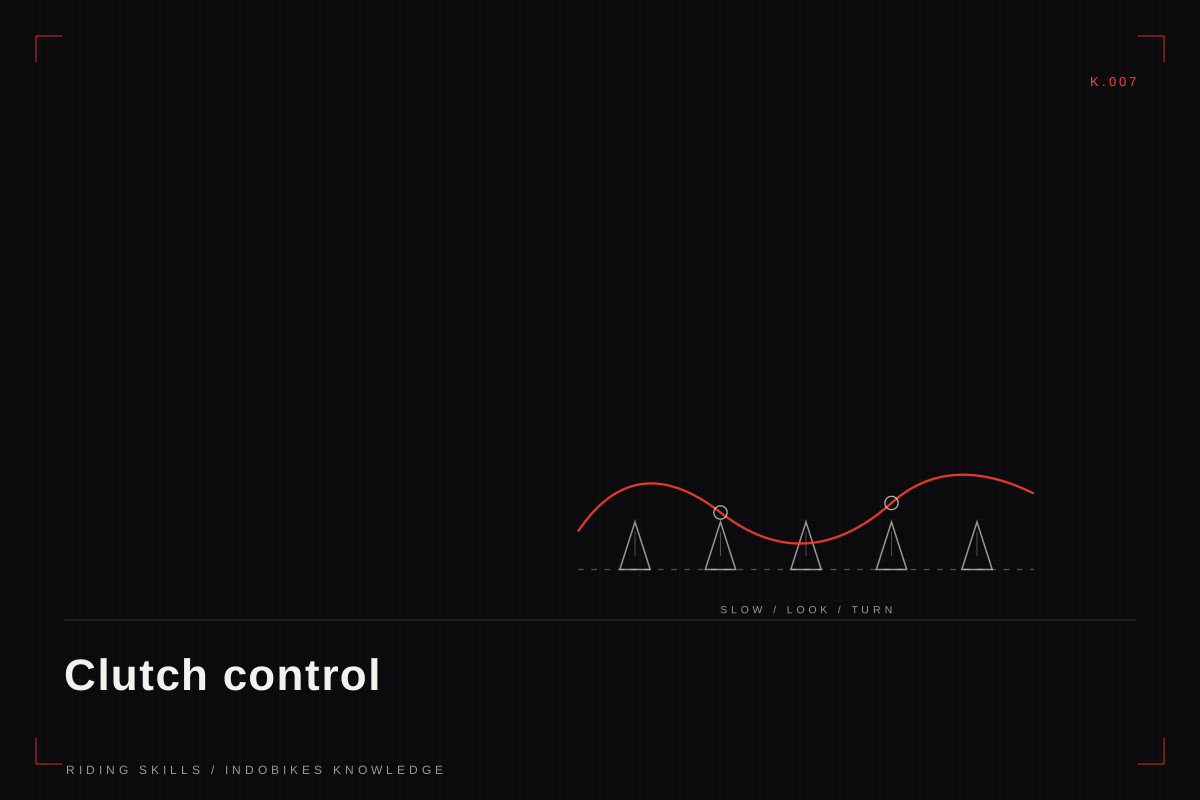
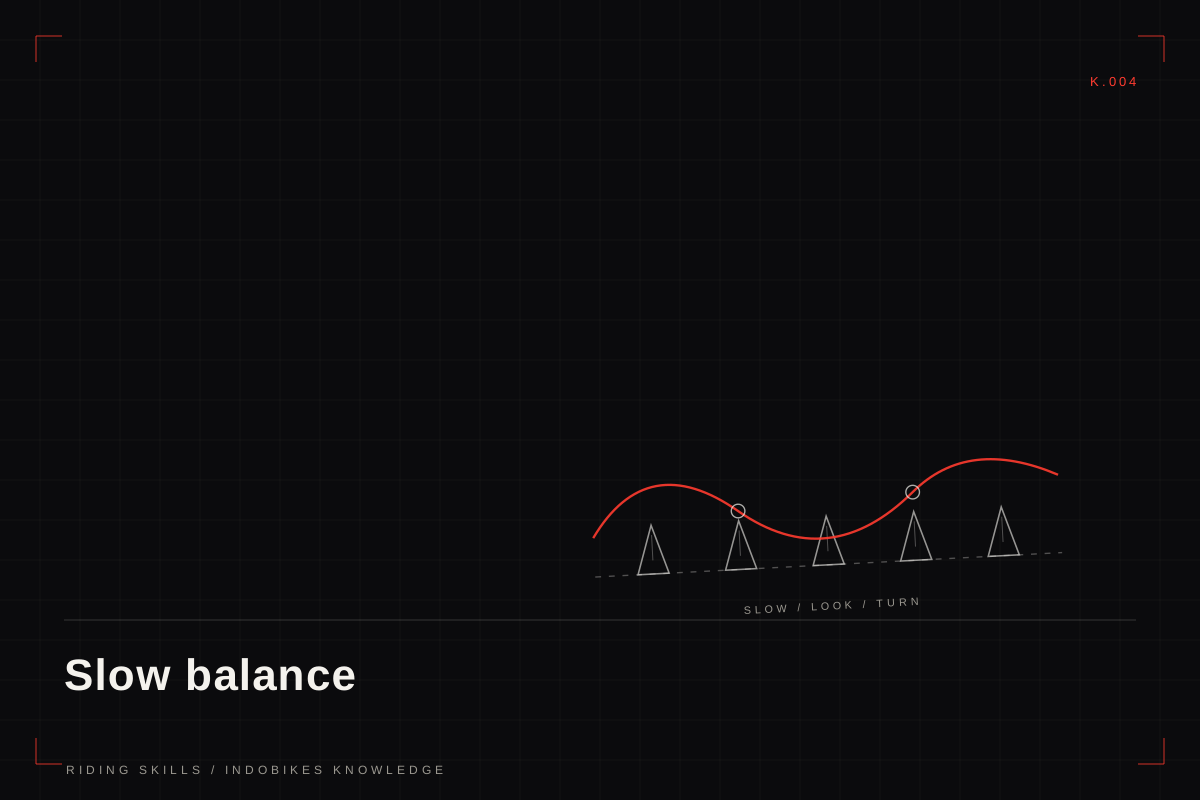
In stop-start traffic, small throttle openings combined with the clutch keep the bike controllable. Use engine braking to slow rather than pulling the clutch and coasting, because a bike in gear with the throttle closed is more stable and more ready to move. Keep the revs above the point where the engine snatches. A steady throttle and a covered clutch are worth more in traffic than any amount of steering.
A scooter's CVT connects the throttle almost directly to road speed, with the belt and variator doing the gearing. That makes slow traffic easy but can feel jerky if the belt, rollers or clutch shoes are worn. If a scooter snatches at low speed when it used to be smooth, the transmission needs inspection rather than a change of technique.
Wet roads, gravel and poor surfaces
On a low-grip surface, every throttle change has a larger effect. Open the throttle more gradually, use a higher gear to soften the torque and avoid sudden closures that can lock or slide the rear wheel. The aim is to keep the bike settled even while the surface is moving underneath it. Smoothness is the traction control the rider can actually control.
Engine braking is useful, but on wet tarmac or loose gravel a closed throttle can break the rear tyre loose, especially on a light bike or in a low gear. A slipper or assist clutch reduces that effect but does not remove it. Traction control helps, yet it works best when the rider is already being smooth.
Signs the throttle is working against you
A hanging idle, a snatch when pulling away, a stiff tube or a bike that surges at a steady speed all point to a maintenance issue rather than a technique problem. So does a throttle that does not return fully, which is a safety fault and should be fixed before the bike is ridden. Any of these should be investigated before the next long ride.
Have the cable, tube, linkage and electronic sensor checked at service. Do not lubricate a cable that is designed to run dry, and do not adjust free play by guesswork. A correctly set throttle is one of the cheapest safety improvements a bike can have, and one of the most often ignored. Small adjustments matter, and a workshop can make them in minutes.
Checklist
- Check that the throttle returns freely with the engine off.
- Take up the slack before rolling on.
- Roll on and off in continuous movements, not steps.
- Keep a light, steady opening through a corner.
- Use engine braking to slow instead of coasting.
- Use a higher gear to soften torque on wet or loose ground.
- Have a snatch or hanging idle checked at service.
Questions
Is it bad to close the throttle suddenly?
It is not automatically dangerous, but it shifts weight hard onto the front and can slide the rear on a low-grip surface. Smooth closures keep the suspension and tyres settled, and they make the bike easier to steer.
Why is my bike jerky at a constant speed?
A worn chain, a loose throttle cable, a dirty fuel system or a badly mapped electronic throttle can all cause it. Constant-speed surging is usually mechanical or electronic, not a rider error.
Does throttle control matter on a scooter?
Yes. The CVT removes the gear choice, but the throttle still controls torque and weight transfer. Smooth openings are what keep a scooter stable in traffic and on wet roads.