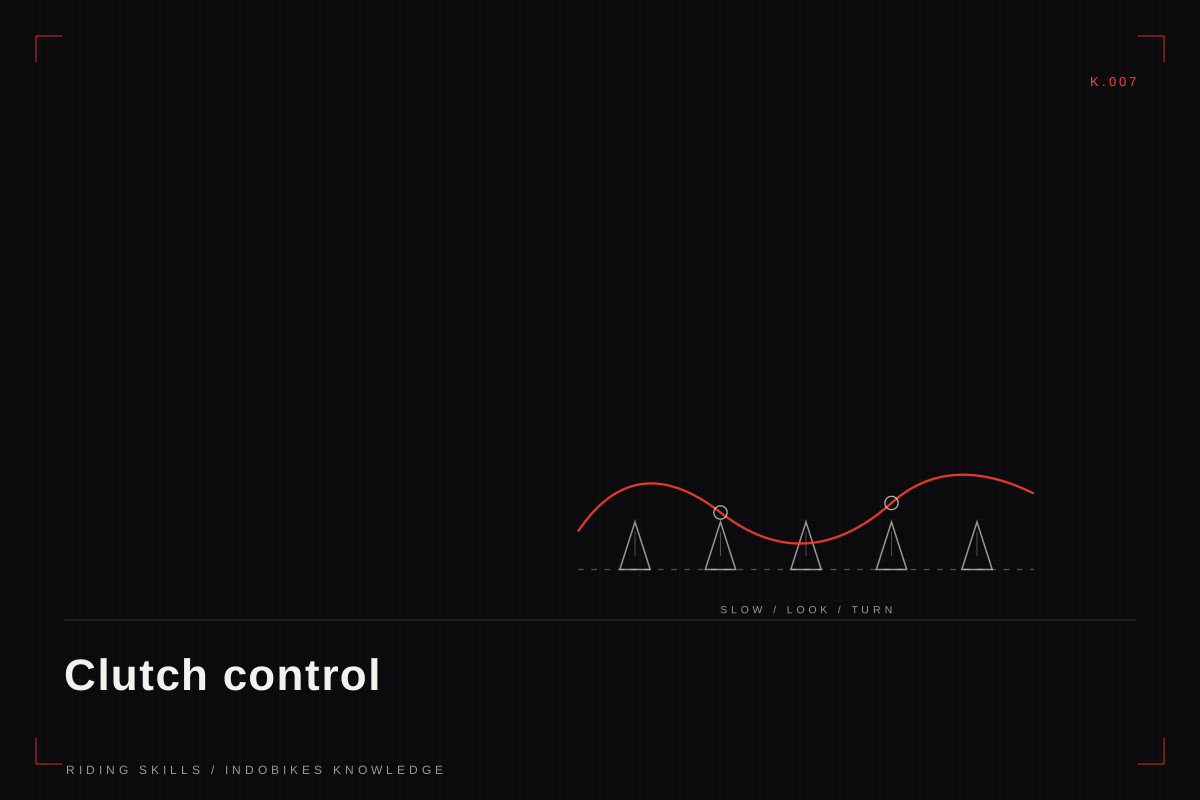
Clutch control is the skill of holding the lever in the narrow band where the plates begin to bite, and using that band to feed power to the rear wheel gradually. Beginners stall because they release past the band too quickly; they jerk because they leave it too abruptly; they burn plates by holding it under heavy load.
What the lever is actually moving
A typical motorcycle clutch is a stack of friction plates and steel plates clamped together by springs. The lever pulls against those springs and separates the stack. With the lever fully in, the plates are apart and the engine spins without driving the wheel. With it fully out, the springs clamp the stack and the drive is solid.
The friction zone is the travel between those two states, where the plates are pressed together but still slipping against each other. Most of the lever's travel does nothing; the useful part is often a short band near the middle. Finding that band, and being able to hold the lever there, is the whole skill.
Find the zone before you ride
With the engine off and the bike in first gear, pull the clutch in and rock the bike forward. Release the lever slowly until the bike stops rolling freely: that is the biting point. Repeat it a few times so your hand learns the position rather than relying on the mark on the lever. The hand learns faster than the head, which is why repetition matters more than reading about it.
Then start the engine, in neutral, and repeat the movement while listening. The revs drop slightly as the plates take load. Do this standing still with both feet down, in a safe place, before you try to pull away. A clutch that drags, so the bike creeps with the lever fully in, needs adjustment or repair.
The launch, step by step
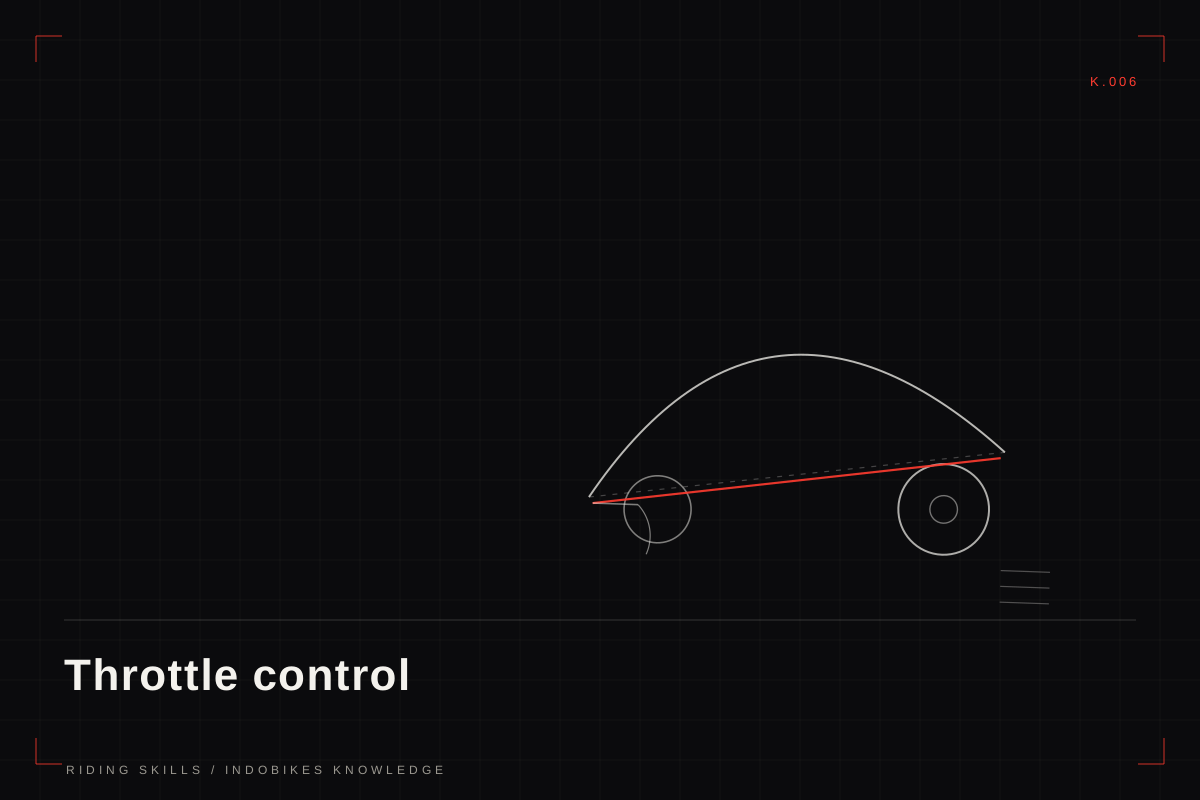
Pull the clutch in, select first, and set the revs a little above idle. Release the lever smoothly to the friction zone and hold it there. The bike will begin to move as the plates bite. Add a little throttle to keep the revs steady, then let the lever out the rest of the way as the bike gathers speed.
Keep your feet on the pegs once the bike is moving, and look ahead rather than down at the lever. Most beginner launches fail because the rider releases too fast, uses too little throttle, or stares at the controls and loses the sense of balance that slow speed needs. If the bike stalls, reset and try again rather than adding more throttle to compensate.
Slow riding is clutch work
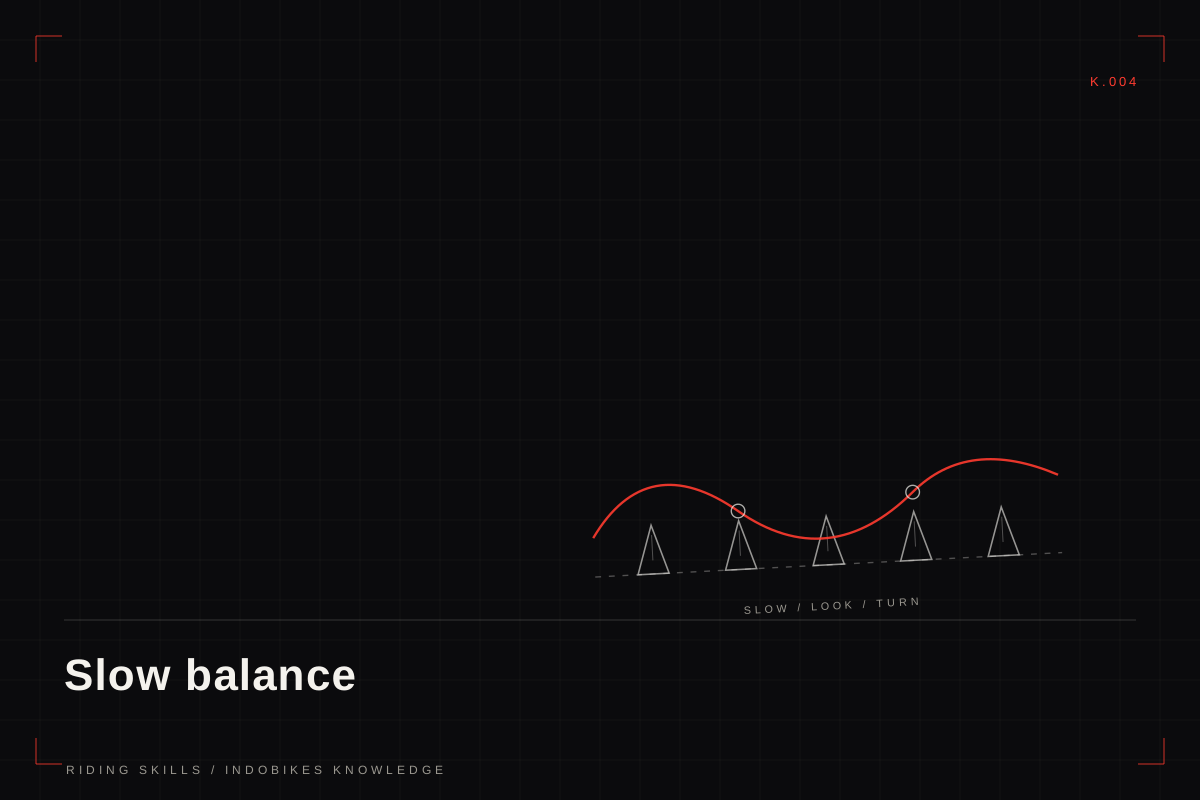
At walking pace the clutch becomes the speed control. Holding the lever in the friction zone, with light throttle and a trailing rear brake, lets the engine run comfortably while the bike moves slowly and smoothly. The clutch is slipping by design in this situation, and a wet clutch is cooled by the engine oil around it.
Heat is the limit. Slipping the clutch briefly at low speed is normal; slipping it for a long time under heavy load, such as a steep hill with a passenger, builds heat quickly and wears the plates. If you can smell a sharp, hot smell or the lever feels different, stop and let the bike cool.
Shifting without drama
For a gear change, pull the clutch decisively, move the lever, and release smoothly. A hesitant shift with the clutch half engaged wears the plates and makes the gearbox feel notchy. On most road bikes the shift itself is quick; the clutch work around it should be just as positive. A preloaded lever and a quick, light touch make the shift cleaner once the basics are automatic.
Do not rest your hand on the lever while riding. Even light pressure can hold the plates partly apart, causing slip, heat and wear, and it removes the free play the system needs. Downshifts are smoother if you match the revs roughly to the lower gear, though a slipper or assist clutch makes a poor match more forgiving.
What actually wears a clutch out
The main causes are slipping under load, resting a hand on the lever, using an oil with friction modifiers that the clutch was not designed for, and a badly adjusted cable that never lets the plates clamp fully. A dragging clutch that will not fully release is just as damaging in its own way. Each of these keeps the plates slipping when they should be locked together.
Symptoms worth acting on include revs rising without a matching increase in speed, a burning smell, judder when pulling away, and a bike that creeps forward with the lever pulled in. These are workshop diagnoses, not things to solve by changing your riding style around a worn component. Ignoring them usually turns a simple adjustment into a replacement.
If your bike has no clutch lever
Most scooters and many underbones use a centrifugal clutch that engages as engine speed rises, paired with a CVT or a foot-operated gear lever. There is no friction zone to hold, so slow control comes from the throttle, the rear brake and, on some models, a manual mode. The rider's job is to keep the throttle smooth so the clutch engages without snatching.
Engine braking is weaker on these transmissions, which matters on long descents and when approaching a corner. The rider has to plan speed earlier and use the brakes more deliberately. That is a difference in technique, not a defect, but it is worth knowing before riding a bike with a different transmission. Riders moving from a manual bike should allow a few rides to adjust.
Checklist
- Locate the biting point with the engine off before riding.
- Set lever free play to the figure in the owner's manual.
- Hold the friction zone instead of releasing in one movement.
- Add a little throttle as the plates begin to bite.
- Keep your hand off the lever once you are moving.
- Use the clutch, throttle and rear brake together at walking pace.
- Investigate any burning smell, judder or creeping at standstill.
Questions
How do I stop stalling when pulling away?
Set a few more revs than you think you need, bring the lever to the friction zone and hold it there until the bike is clearly moving. Stalls usually come from releasing the lever past the zone before the bike has enough speed.
Can I hold the clutch at the biting point in traffic?
Briefly, yes. It is how slow riding works. Holding it for long periods under load builds heat, so use the rear brake to take some of the load and let the clutch fully engage whenever you are moving faster than walking pace.
Does a scooter have a clutch?
It has a centrifugal clutch inside the transmission that engages automatically as the engine revs rise. There is no lever to operate, so the rider controls low-speed behaviour with throttle and rear brake.